Planning where to stay in Mexico City is often the decision that shapes an entire journey. Few global capitals are as layered as Mexico’s largest metropolis, where neighborhoods possess distinct identities, rhythms, and architectural languages. A first visit can feel exhilarating, but also overwhelming. Choosing the right base is less about finding a hotel and more about selecting the perspective through which you will experience the city.
Mexico City rewards curiosity. One morning may begin beneath centuries-old stone arcades. Continue through modernist galleries, pause over an unhurried lunch. Finally end with contemporary Mexican cuisine served in an intimate dining room. Distances may seem short on a map, yet each neighborhood offers its own atmosphere, pace, and social life. Staying in the right district allows visitors to spend less time navigating traffic and more time discovering the city’s remarkable cultural depth.
Why Choosing the Right Neighborhood Matters
Unlike cities with a single historic center surrounded by residential districts, Mexico City unfolds as a collection of interconnected neighborhoods, each reflecting different moments in its history. Colonial plazas coexist with Art Deco residences, glass towers overlook leafy parks, and independent galleries sit beside long-established family businesses.
For first-time visitors, location influences almost every aspect of the experience:
- Walkability
- Access to museums and cultural institutions
- Dining options
- Evening atmosphere
- Architectural character
- Transportation efficiency
A thoughtfully chosen neighborhood creates opportunities for spontaneous discoveries—perhaps a bookstore hidden behind a quiet courtyard or a café that becomes part of a morning ritual. These moments often become the memories that endure long after a trip ends.
Understanding Mexico City’s Many Personalities
Mexico City is best understood not as a single destination but as several cities woven together.
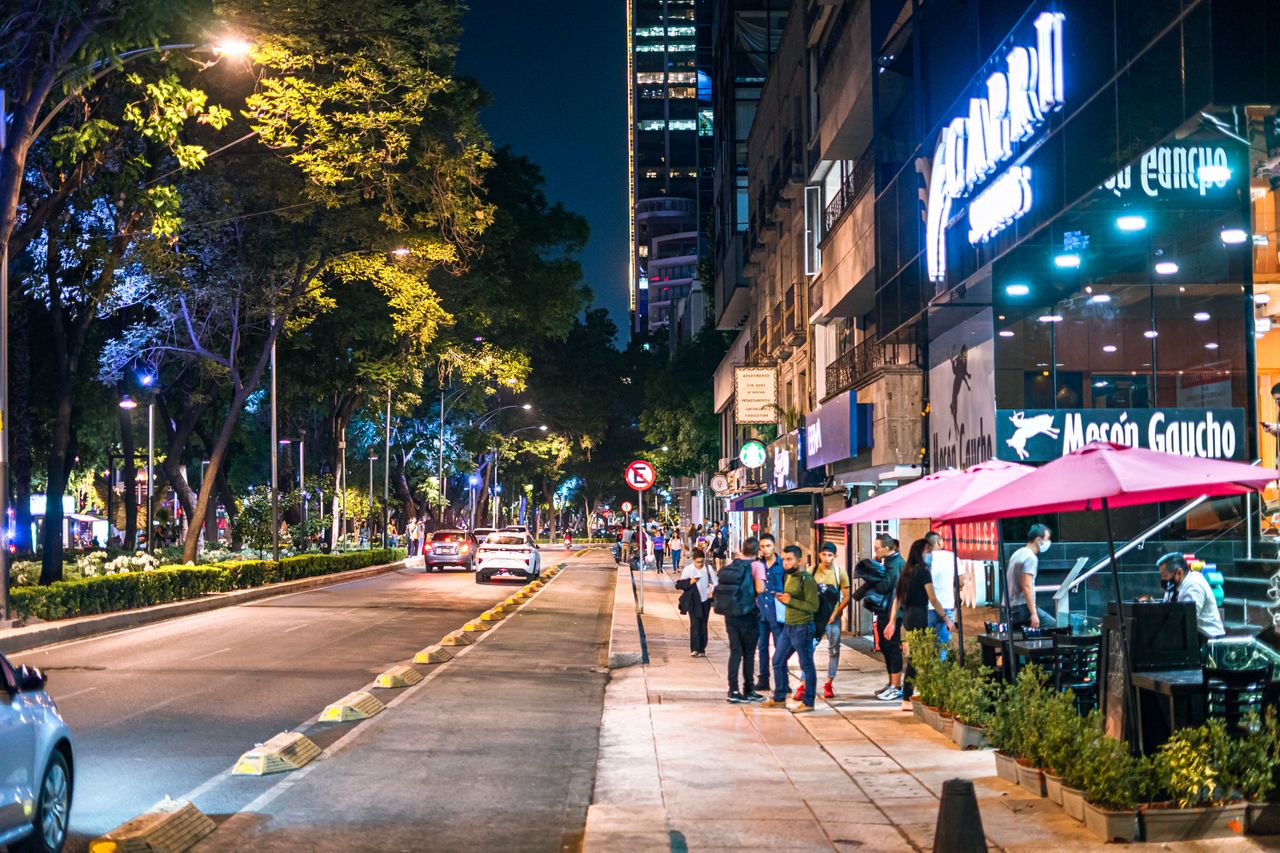
Its historic heart tells the story of centuries of political, religious, and cultural evolution. To the west, elegant residential districts reveal the city’s twentieth-century expansion. Tree-lined avenues connect parks, museums, embassies, restaurants, and contemporary architecture in ways that encourage exploration on foot.
The city’s remarkable scale means every visitor benefits from establishing a comfortable base before venturing farther afield. Fortunately, several neighborhoods consistently stand out for first-time travelers, each appealing to different interests and travel styles.
Polanco: Contemporary Luxury with Cultural Depth
Among Mexico City’s neighborhoods, Polanco offers one of the most balanced introductions to the capital.
Wide sidewalks, mature trees, carefully maintained public spaces, and a sophisticated urban rhythm make it especially comfortable for visitors arriving for the first time. Walking through the neighborhood feels intuitive rather than overwhelming, allowing travelers to discover the city at their own pace.
The district sits beside Bosque de Chapultepec, one of the world’s largest urban parks, providing immediate access to museums, lakes, walking paths, and cultural institutions. From here, visitors can easily reach the National Museum of Anthropology, contemporary galleries, and some of the city’s finest examples of modern Mexican architecture.
Along Avenida Presidente Masaryk, international luxury boutiques coexist with independent design stores, refined cafés, and acclaimed restaurants without overwhelming the neighborhood’s residential character. Nearby Lincoln Park offers another reminder that Polanco values generous public space as much as elegant architecture.
For travelers who appreciate thoughtful design, exceptional dining, and the ability to walk comfortably between experiences, Polanco delivers a rare combination of sophistication and practicality.
Suggested internal link: After this section, link the anchor text “discover our Rooms & Suites” to the Rooms & Suites page.
Roma Norte: Creative Energy and Historic Character
Roma Norte appeals to travelers drawn to creativity, independent culture, and architectural heritage.
Its streets reveal an engaging mix of restored early twentieth-century mansions, contemporary galleries, neighborhood cafés, bookstores, and boutique shops. The area’s eclectic identity has made it a favorite among designers, photographers, writers, and entrepreneurs who appreciate places with personality.
Life here unfolds at street level. Mornings begin in specialty coffee shops, afternoons encourage gallery visits, and evenings naturally transition into intimate wine bars and inventive restaurants.
While Roma Norte rewards exploration, its popularity also means a livelier atmosphere throughout the day and night. Visitors seeking constant energy often find it inspiring, while those preferring quieter surroundings may appreciate visiting from another neighborhood rather than staying within it.
Condesa: Green Streets and Leisurely Living
Adjacent to Roma Norte, Condesa offers a more relaxed interpretation of urban living.
Curving avenues shaded by mature trees, Art Deco apartment buildings, neighborhood bakeries, and leafy parks create an environment where daily routines unfold at an unhurried pace. Walking remains the preferred way to experience the district, with each block revealing small cafés, independent boutiques, and inviting terraces.
Condesa particularly suits visitors who value mornings outdoors, long lunches, and evenings spent enjoying the neighborhood rather than crossing the city.
Its atmosphere feels residential without becoming isolated, making it an appealing choice for couples, extended stays, and travelers who enjoy balancing sightseeing with slower moments of everyday city life.
Centro Histórico and Reforma: Two Essential Perspectives
For travelers fascinated by history, Centro Histórico provides unparalleled access to the origins of Mexico City. Grand civic buildings, colonial architecture, museums, plazas, and centuries of cultural heritage converge within a compact urban landscape.
A stay here places visitors close to some of the capital’s most significant landmarks, yet the district’s intensity, heavy pedestrian activity, and bustling commercial environment may feel demanding after a full day of exploration.
By contrast, Reforma reflects Mexico City’s contemporary ambition. Anchored by the broad boulevard of Paseo de la Reforma, the area combines corporate headquarters, international hotels, public monuments, and modern office towers.
Business travelers frequently appreciate Reforma’s accessibility and connectivity, while leisure visitors often find it serves best as a corridor linking different parts of the city rather than a neighborhood with its own intimate identity.
Matching Your Travel Style to the Right Neighborhood
Each neighborhood offers a different way to experience Mexico City.
Choose Centro Histórico if your priority is history, monumental architecture, and cultural landmarks.
Or choose Roma Norte if your itinerary revolves around independent galleries, creative spaces, cafés, and contemporary urban culture.
Choose Condesa if leisurely walks, neighborhood restaurants, parks, and a relaxed residential atmosphere define your ideal trip.
Or choose Reforma if business meetings, conference venues, and efficient transportation are central to your visit.
Many experienced travelers, however, eventually gravitate toward Polanco because it combines many of these qualities without requiring significant compromise. Cultural institutions are nearby, dining is exceptional, architecture rewards careful observation, and the neighborhood remains remarkably walkable despite its central location.
Rather than focusing on a single attraction, Polanco offers something more valuable: a sense of balance that allows visitors to experience multiple dimensions of Mexico City comfortably.

Experiencing Mexico City Through the Place You Call Home
Every memorable city leaves an emotional impression as much as a visual one. That impression often begins each morning when you step outside your accommodation and continues until your final evening walk.
The neighborhood you choose influences not only what you see but also how you move, where you pause, and how naturally you connect with local life.
For first-time visitors, the ideal location is rarely the one with the greatest number of attractions. Instead, it is the neighborhood that allows the city to reveal itself gradually, through architecture, conversation, cuisine, public spaces, and daily rhythms.
Polanco embodies that philosophy with quiet confidence. It offers proximity without haste, refinement without excess, and access to many of the experiences that define contemporary Mexico City. From here, the capital becomes less intimidating and more personal—an invitation to explore thoughtfully rather than simply check destinations off an itinerary.
Ultimately, deciding where to stay in Mexico City is about choosing the lens through which your first encounter with this remarkable metropolis will unfold. The right neighborhood does more than provide an address; it becomes part of the story you will remember long after the journey ends.
Leave a Reply