
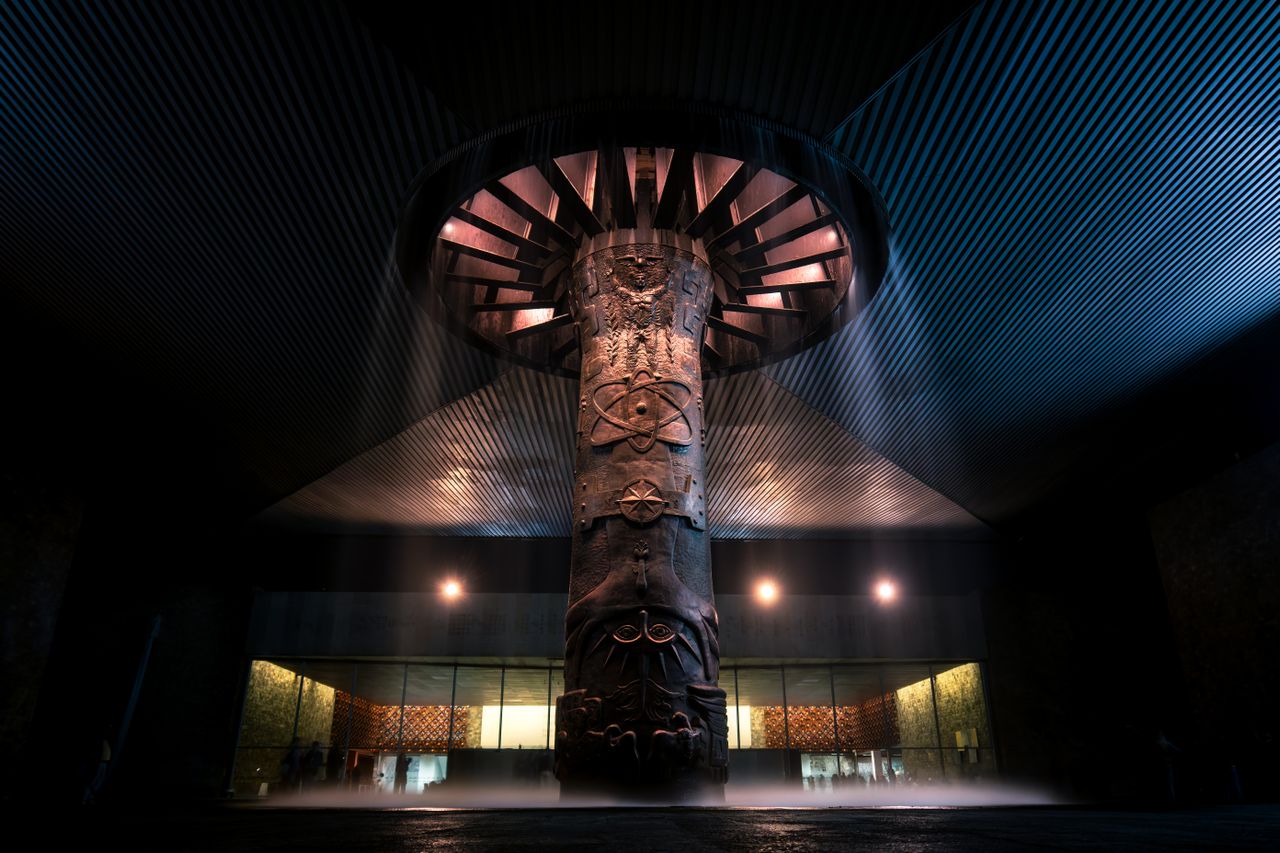
There are cities that impress at first glance, and there are cities that reveal themselves slowly. Mexico City belongs firmly to the latter category. The true richness of culture in Mexico City does not announce itself through monuments alone. It emerges through layers of history, architecture, conversation, cuisine, art, and everyday rituals. It unfolds in quiet courtyards hidden behind busy avenues, in contemporary galleries occupying former industrial spaces, and in restaurants where culinary innovation feels inseparable from cultural identity.
Few cities contain so many worlds at once. Ancient civilizations, colonial grandeur, modernist experimentation, and contemporary creativity coexist within a single urban landscape. The result is not simply a destination filled with cultural attractions. It is a living cultural ecosystem—one that has earned its place among the world’s great cultural capitals.
From the elegant streets of Polanco to the historic heart of the city, Mexico City offers something increasingly rare in modern urban life: authenticity that continues to evolve.
Culture in Mexico City: A Civilization Built in Layers
To understand Mexico City’s cultural significance, one must begin with its extraordinary depth.
Long before it became one of the world’s largest metropolitan centers, this valley was home to Tenochtitlán, the sophisticated capital of the Mexica civilization. The city that emerged after the Spanish conquest did not erase what came before. Instead, it grew upon it.
Today, centuries coexist within a few city blocks.
A colonial church may stand atop ancient foundations. A contemporary museum may overlook streets that have witnessed five hundred years of transformation. This layering creates a cultural density that few global cities can match.
Unlike cities that preserve history behind glass, Mexico City integrates the past into daily life. History remains visible, tangible, and often surprising.
Walking through the city feels less like moving through space and more like traveling through time.
A City Defined by Reinvention
What distinguishes Mexico City from many historic capitals is its capacity for constant reinvention.
Artists, architects, writers, chefs, designers, and entrepreneurs continuously reinterpret Mexican identity through contemporary lenses. Rather than preserving culture as a static artifact, the city treats culture as an ongoing conversation.
That conversation can be found everywhere—from experimental design studios and independent bookstores to internationally celebrated cultural institutions.
Architecture as a Reflection of Identity
Every cultural capital expresses itself through architecture. Mexico City does so with unusual complexity.
Its architectural landscape resists easy categorization. Colonial mansions coexist with Art Deco residences. Mid-century modernist masterpieces stand beside striking contemporary structures.
The city rewards curiosity.
In neighborhoods such as Polanco, architecture reflects a sophisticated urban rhythm. Tree-lined avenues reveal elegant residential buildings, carefully curated boutiques, private art collections, and thoughtfully designed public spaces. Elsewhere, modernist icons created by figures such as Luis Barragán continue to influence architects around the world.
What makes Mexico City’s architecture remarkable is not simply aesthetic excellence. It is the way built spaces reflect cultural identity, social evolution, and artistic ambition.
For visitors interested in exploring this dimension further, our guide to architecture in Mexico City offers an ideal starting point.
The Creative Energy of a Global Art Capital
Art in Mexico City exists far beyond museum walls.
It lives in public spaces, private collections, galleries, cultural foundations, and the visual language of everyday life.
The city has long attracted artists, intellectuals, and cultural innovators from around the world. Today, that creative legacy continues through a dynamic contemporary art scene that ranks among the most influential in the Americas.
Museums That Shape Global Conversations
Mexico City’s museums do more than preserve history. They actively shape cultural discourse.
Institutions such as Museo Nacional de Antropología, Museo Tamayo, and Museo Jumex offer perspectives that connect ancient civilizations, modern creativity, and global artistic movements.
Yet some of the city’s most memorable cultural encounters happen unexpectedly.
A small gallery opening.
A design exhibition.
A conversation at a book launch.
In Mexico City, culture often feels less institutional and more participatory.
Those seeking a deeper exploration may enjoy discovering our recommendations for art and museums in Polanco.
Gastronomy as Cultural Expression
Few cities communicate their identity through food as powerfully as Mexico City.
Here, gastronomy functions as a cultural language.
Street vendors, neighborhood markets, family-run establishments, and internationally acclaimed restaurants all contribute to a culinary landscape that reflects centuries of migration, exchange, adaptation, and creativity.
The city’s food culture defies hierarchy. A memorable taco can carry as much cultural significance as a tasting menu crafted by a celebrated chef.
This democratic approach to excellence feels distinctly Mexican.
The Table as a Place of Memory
Food in Mexico City often serves as a bridge between past and present.
Traditional techniques survive not through preservation efforts alone but because they remain part of contemporary life. Indigenous ingredients continue to inspire innovation. Regional traditions find new interpretations in urban kitchens.
The result is a gastronomic scene that feels intellectually stimulating while remaining deeply emotional.
Visitors frequently arrive expecting exceptional dining. They leave understanding that gastronomy here is inseparable from culture itself.
For a closer look, explore our guide to Mexico City gastronomy.
A Lifestyle Shaped by Curiosity
Great cultural capitals share a common characteristic: they encourage engagement.
Mexico City rewards those who participate rather than simply observe.
Its cultural life extends beyond formal institutions into cafés, bookstores, parks, music venues, design studios, and neighborhood gatherings. Conversations matter here. Ideas circulate freely. Creative communities overlap in unexpected ways.
The city’s most sophisticated luxury is not exclusivity.
It is access.
Access to knowledge.
Also, access to creativity.
And finally, access to experiences that feel genuinely local.
This quality is particularly evident in Polanco, where contemporary elegance meets intellectual vitality. The neighborhood offers proximity to some of the city’s finest cultural experiences while maintaining a sense of refinement and privacy.
For guests seeking meaningful immersion, our curated recommendations for cultural experiences in Mexico City reveal a side of the city that many visitors never encounter.
Why the World Continues to Look Toward Mexico City
The world’s great cultural capitals do more than preserve heritage.
They influence the future.
Mexico City has become an increasingly important center for contemporary design, architecture, gastronomy, fashion, publishing, and artistic production. International creatives arrive seeking inspiration. Global institutions collaborate with local talent. New ideas emerge from conversations between tradition and innovation.
Yet despite its growing influence, the city retains something profoundly human.
It remains a place of neighborhoods rather than districts.
Of conversations rather than spectacles.
Of cultural participation rather than cultural consumption.
That balance feels increasingly rare.
The Luxury of Cultural Immersion
Perhaps this is the ultimate reason Mexico City belongs among the world’s cultural capitals.
Its cultural richness never feels distant.
It can be experienced while walking through a neighborhood at dusk. While sharing a meal with friends, discovering a gallery tucked behind an unassuming façade. Or while listening to stories that connect generations.
The city invites curiosity and rewards attention.
For travelers who seek more than landmarks—for those who value meaning, beauty, and connection—Mexico City offers an experience that continues long after departure.
At OLIVER Luxury Experiences, located in the heart of Polanco, this cultural energy becomes part of everyday life. The city exists just beyond the door, waiting to reveal another layer of itself.
And that may be the defining characteristic of every true cultural capital: no matter how many times you return, there is always something new to discover.
Leave a Reply