
There are cities that preserve history behind glass. And there are cities that erase it in pursuit of the future. Mexico City does neither. Here, centuries overlap without apology. A volcanic empire breathes beneath financial towers. A baroque church casts its shadow over brutalist concrete. Jacaranda petals fall beside the polished facades of Polanco. In this restless capital, memory never disappears. It simply changes neighborhoods.
The City Where All Times Coexist reveals itself slowly. Not through monuments alone, but through rhythm, texture, contradiction, and ritual. Morning begins with the scent of espresso drifting from a contemporary café on Avenida Emilio Castelar. By afternoon, the city folds into ancient stone, museum corridors, hidden cantinas, and markets dense with voices and color. At night, skyscrapers illuminate the horizon while pre-Hispanic mythology survives in conversation, cuisine, and design.
Mexico City does not ask visitors to choose between past and future. It invites them to inhabit both at once.
The City Where All Times Coexist Through Architecture
Few capitals negotiate time as elegantly as Mexico City. The city’s architecture reads like an intimate dialogue between civilizations.
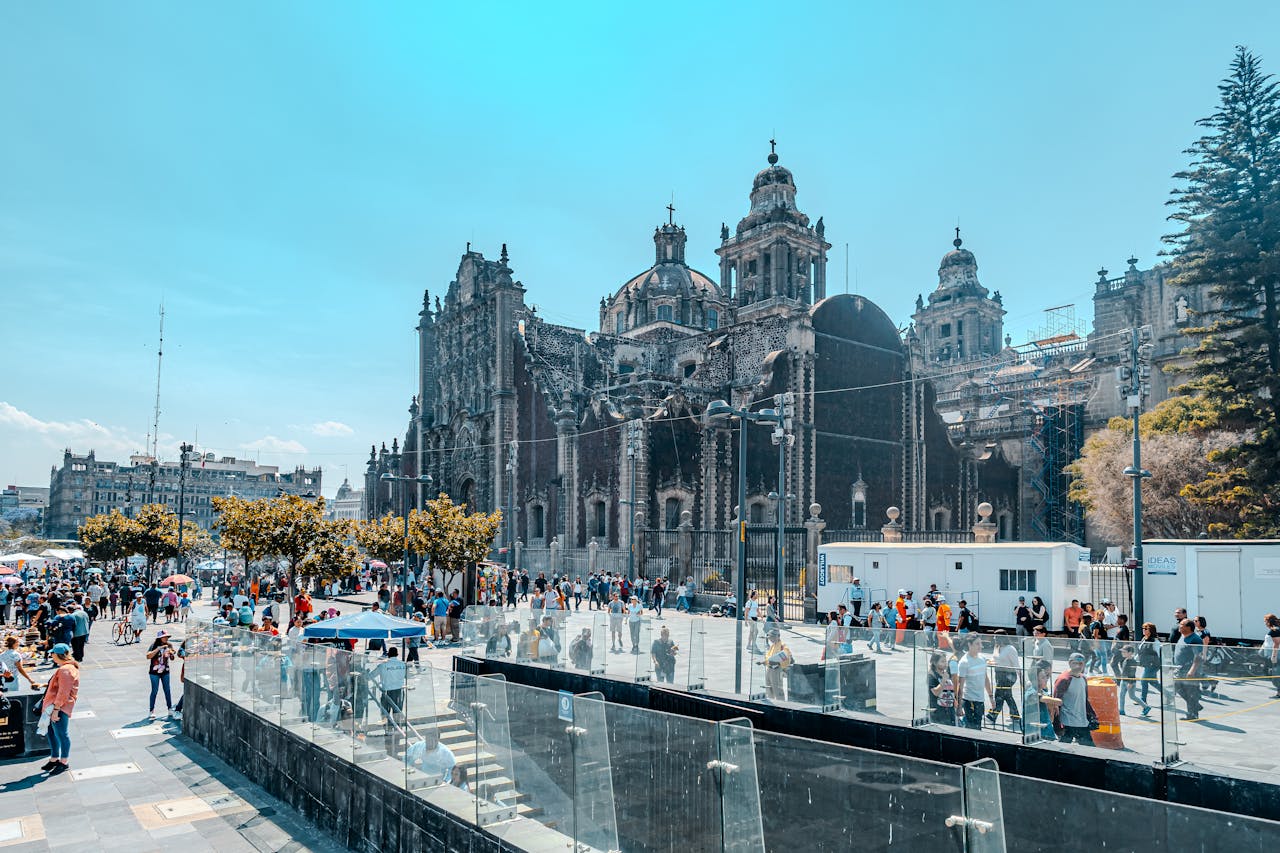
In the historic center, the remains of Tenochtitlán continue to emerge beneath colonial foundations. The ancient stones of the Templo Mayor sit only steps from the grand facades of the Metropolitan Cathedral. The juxtaposition feels less accidental than inevitable. One empire never fully replaced the other. They fused.
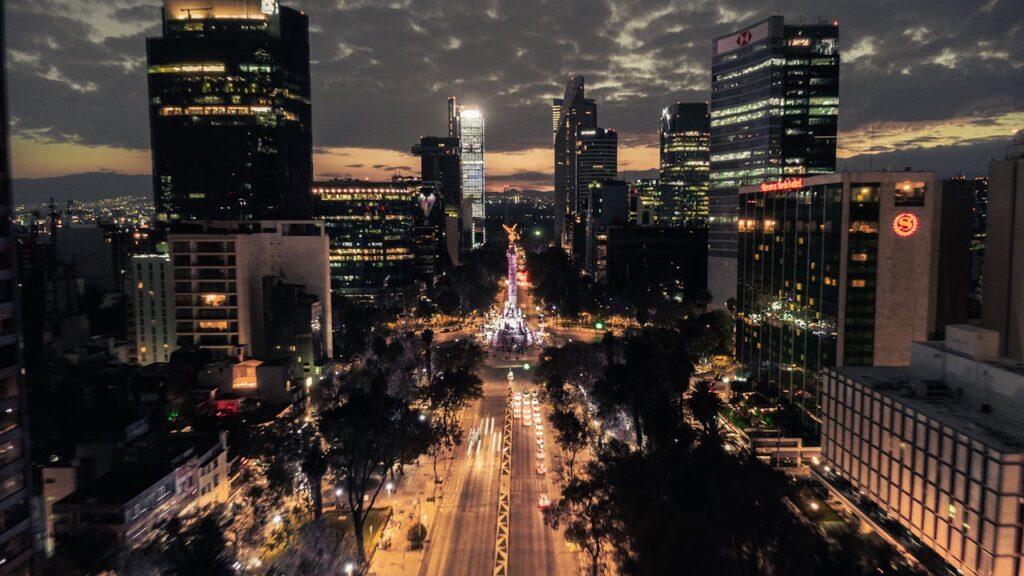
Further west, modern Mexico rises through steel, marble, and glass. Along Paseo de la Reforma, reflective towers frame the skyline with cosmopolitan confidence. Yet even here, the city resists uniformity. Mid-century apartment buildings survive beside minimalist residential compounds. Art Deco mansions stand quietly behind jacaranda-lined avenues.
Polanco captures this layered identity with unusual precision. The neighborhood feels international without abandoning its Mexican soul. Contemporary galleries occupy converted homes. Boutique hotels blend discreet luxury with architectural restraint. Restaurants favor intimacy over spectacle.
The city’s visual language remains deeply emotional. Architect Luis Barragán understood this instinctively. His use of silence, shadow, texture, and color transformed architecture into atmosphere. Decades later, his influence still shapes the emotional geometry of the city.
Mexico City does not preserve architecture as nostalgia. It lives inside it.
Spaces That Hold Memory
Some cities build upward to escape their past. Mexico City builds around it.
The result creates a rare urban intimacy. Ancient ruins appear unexpectedly beneath office buildings. Colonial courtyards open behind contemporary storefronts. Time feels porous here.
Even luxury reflects this layered sensibility. The most refined spaces in the city rarely rely on excess. Instead, they cultivate emotional precision: natural materials, filtered light, curated silence, and a deep awareness of place.
This philosophy defines modern hospitality in Polanco. The experience is less about spectacle and more about belonging within the city’s cultural rhythm.
Gastronomy as Cultural Memory
Mexico City’s culinary scene reveals another form of coexistence. Ancient ingredients meet contemporary technique without losing their origin stories.
At breakfast, blue corn tortillas arrive beside single-origin coffee and French pastries. By evening, tasting menus reinterpret indigenous traditions with startling refinement. Yet the city never loses its intimacy with food. Culinary sophistication here remains emotional rather than performative.
Markets still shape the city’s palate. In places like Mercado de San Juan, ingredients become anthropology. Wild herbs, tropical fruits, insects, seafood, and regional spices tell stories older than the republic itself.
Chefs across the city increasingly treat Mexican cuisine not as trend, but as cultural preservation. Restaurants explore migration, memory, biodiversity, and regional identity through flavor. Dining becomes intellectual without sacrificing pleasure.
Polanco stands at the center of this gastronomic evolution. The neighborhood balances international influence with distinctly Mexican sensibilities. Elegant dining rooms coexist with hidden taco counters, natural wine bars, and intimate cafés.
The city rewards curiosity more than itinerary.
The Ritual of Dining in Mexico City
In many capitals, luxury dining separates itself from ordinary life. Mexico City resists that divide.
Here, a late-night taco can feel as culturally significant as a reservation at one of Latin America’s most celebrated restaurants. Both experiences belong to the same ecosystem. Both reveal the city’s obsession with flavor, conversation, and ritual.
Meals unfold slowly. Tables linger. Lighting softens. The city becomes cinematic after dark.
Mexico City understands that gastronomy is not simply consumption. It is identity performed collectively.
Art, Design, and the Emotional Intelligence of the City
Mexico City has become one of the world’s most compelling creative capitals precisely because it refuses aesthetic purity.
Design here absorbs contradiction. Indigenous symbolism merges with European influence. Brutalism meets handcrafted textiles. Minimalism softens beneath volcanic stone, wood, and handmade ceramics.
The city’s art scene reflects this emotional complexity. Museums, galleries, artist studios, and independent spaces form a cultural ecosystem that feels alive rather than institutional. Creativity spills naturally into everyday life.
In Polanco, contemporary art exists comfortably beside residential calm. The neighborhood moves at a quieter frequency than many global luxury districts. Its elegance feels intellectual instead of theatrical.
Meanwhile, neighborhoods like Roma and Condesa continue to shape conversations around fashion, photography, publishing, and contemporary design. Across the city, creative energy feels less curated than inevitable.
A Capital Defined by Sensibility
What ultimately distinguishes Mexico City is not scale, wealth, or architecture alone. It is emotional intelligence.
The city understands mood. It knows how to frame light against stone. How to balance chaos with stillness. How to preserve intimacy within enormity.
Even its contradictions feel choreographed. Street vendors work beneath glass towers. Ancient mythology survives inside contemporary art. Luxury exists beside improvisation.
This coexistence gives the city unusual depth. Mexico City never becomes one thing long enough to simplify itself.
The Luxury of Existing Between Eras
Perhaps that is why sophisticated travelers continue returning to Mexico City. Not simply for museums or restaurants, but for perspective.
The city reminds us that modernity does not require forgetting. Progress can coexist with ritual. Innovation can preserve memory.
In an era obsessed with speed and reinvention, Mexico City remains defiantly layered. It allows history to remain visible. Not polished into nostalgia, but integrated into daily life.
From the quiet sophistication of Polanco to the monumental energy of Reforma, the city reveals itself as a place where all eras remain present at once.
And perhaps that is its greatest luxury.
Not exclusivity. Not spectacle.
Continuity.
To walk through Mexico City is to move through overlapping worlds. Ancient and contemporary. Intimate and monumental. Refined and chaotic. Every avenue carries echoes. Every skyline hides older foundations beneath it.
Between ruins and skyscrapers, Mexico City becomes more than a destination. It becomes a meditation on time itself.
Leave a Reply