Business travel has evolved beyond packed itineraries, airport lounges, and predictable accommodations. Today’s professionals—whether executives, entrepreneurs, architects, consultants, or creative directors—often extend work trips into opportunities for cultural discovery, meaningful dining, and personal restoration. Choosing the right business travel boutique hotel is no longer simply about proximity to meetings; it is about finding a place that supports productivity while offering an authentic connection to the destination.
In a city as expansive and layered as Mexico City, where business districts intersect with remarkable architecture, museums, and acclaimed restaurants, where you stay becomes part of the journey itself. The most memorable business trips are often defined not only by successful meetings but also by the neighborhoods explored between them.
Location Is More Than Convenience
For business travelers, location is often measured in minutes. Yet the best locations offer far more than a short commute.
A thoughtfully chosen neighborhood allows visitors to move naturally between professional commitments and personal experiences without spending hours navigating traffic. The ability to walk to a morning coffee, meet colleagues over lunch, spend an hour in a museum, or unwind in a nearby park transforms a demanding itinerary into a more balanced experience.
This is particularly true in Mexico City, where each district reveals a distinct rhythm. Staying in an area that encourages exploration on foot often leads to a deeper understanding of the city’s culture than moving exclusively between meeting rooms and taxis.
The most rewarding business destinations allow work and leisure to coexist rather than compete.
Boutique Hospitality Prioritizes People Over Process
Large hotels have long been associated with business travel because of their scale and standardized services. Boutique hotels offer something different.
Their greatest strength lies in attention rather than abundance.
Smaller properties tend to create an atmosphere where service feels intuitive instead of procedural. Staff often recognize returning guests, adapt to individual preferences, and provide local recommendations that reflect genuine familiarity with the city rather than a scripted concierge list.
For frequent travelers, this sense of recognition can become surprisingly valuable.
After long flights, demanding presentations, and changing time zones, feeling known—even briefly—creates a sense of comfort that larger establishments sometimes struggle to achieve.
Quiet luxury is increasingly defined by this kind of thoughtful hospitality rather than visible excess.
Design Shapes Productivity
Business travelers spend more waking hours inside their accommodations than many leisure guests.
The room becomes an office, a place to prepare presentations, answer emails, hold video calls, read reports, or simply recover between appointments.
Good design therefore becomes functional rather than decorative.
Natural daylight improves concentration. Comfortable seating encourages longer periods of focused work. Excellent sound insulation protects valuable sleep. Reliable connectivity should be effortless rather than advertised as a premium feature.
Architecture also influences wellbeing in less obvious ways.
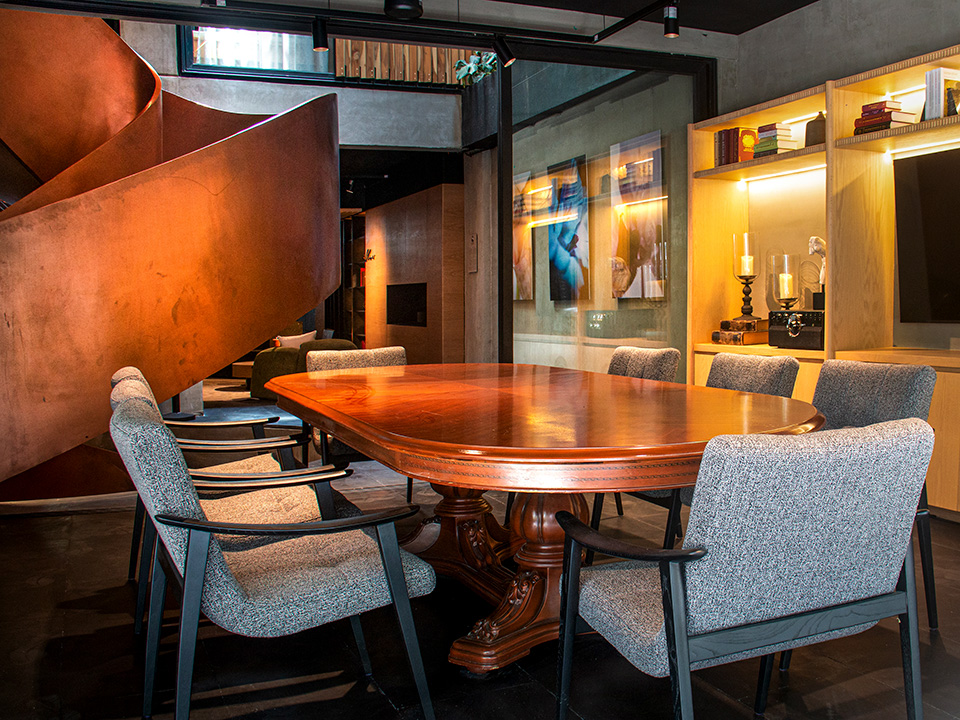
Spaces with balanced proportions, carefully selected materials, natural textures, and calm interiors reduce visual fatigue after long days navigating a busy metropolis.
A well-designed boutique hotel understands that productivity depends as much on atmosphere as on technology.
The Neighborhood Becomes Part of the Experience
One of the defining characteristics of modern business travel is that professionals increasingly seek destinations they can genuinely experience.
Meetings may occupy the day, but evenings often belong to the city.
This makes neighborhood selection almost as important as choosing the hotel itself.
Some travelers are drawn to creative districts filled with independent cafés and galleries. Others prioritize access to financial centers, embassies, or international corporate headquarters. Many hope to combine both.
The ideal neighborhood allows spontaneous discoveries: an architectural landmark encountered during an evening walk, an excellent restaurant recommended by locals, or a quiet green space offering respite from a busy schedule.
Cities reveal themselves differently depending on where you wake each morning.
Why Polanco Appeals to Modern Business Travelers
Among Mexico City’s many neighborhoods, Polanco offers a particularly balanced environment for professionals visiting the capital.
The district combines corporate accessibility with an urban lifestyle that extends well beyond business hours.
International companies, diplomatic offices, and commercial centers sit comfortably alongside independent galleries, contemporary design boutiques, refined cafés, and some of the city’s most respected restaurants.
Walking along Avenida Presidente Masaryk illustrates this coexistence particularly well. International fashion houses share the avenue with carefully curated local brands, while tree-lined streets encourage a slower pace than visitors often expect from one of Latin America’s largest cities.
Just a short walk away, Lincoln Park provides a quieter rhythm for an early morning stroll or an evening pause between appointments.
The nearby Bosque de Chapultepec further expands these possibilities. One of the world’s largest urban parks, it offers museums, lakes, cultural institutions, and extensive green spaces that invite visitors to disconnect from work without leaving the city behind.
For business travelers, this proximity matters.
Rather than ending each day inside a hotel room, Polanco encourages movement through architecture, public spaces, gastronomy, and culture—all within comfortable walking distance.
It becomes possible to finish a meeting, enjoy dinner with colleagues, visit a museum the following morning, and still arrive punctually for the day’s first appointment.
Efficiency and quality of life become complementary rather than competing priorities.
Business Travel Is Becoming More Human
The distinction between business and leisure travel has gradually softened.
Many professionals now extend work trips by a day or two. Others travel with partners who explore while meetings take place. Some simply seek experiences that enrich the journey without disrupting professional commitments.
This evolution has reshaped expectations of hospitality.
Business travelers increasingly value wellness alongside efficiency, neighborhood character alongside convenience, and authentic local experiences alongside predictable luxury.
They are less interested in impressive lobbies than in meaningful mornings.
Less concerned with formal opulence than with thoughtful design.
Less attracted by excess than by places that feel connected to their surroundings.
Boutique hotels naturally align with these priorities because they often reflect the character of their neighborhoods rather than existing apart from them.
Choosing Where You Stay Means Choosing How You Experience the City
Every city tells a different story depending on where you begin each day.
In Mexico City, that choice influences not only your commute but also the conversations you have over dinner, the streets you discover before breakfast, the museums you visit between appointments, and the atmosphere that accompanies your return each evening.
The right business travel boutique hotel does more than provide a comfortable room. It supports concentration when work demands focus, offers calm when schedules become demanding, and creates opportunities to experience the destination beyond the meeting agenda.
For travelers seeking contemporary design, architectural character, walkability, thoughtful hospitality, and access to one of the city’s most compelling neighborhoods, Polanco represents a compelling balance. It allows business travel to remain productive while making space for curiosity, culture, and the quieter pleasures that transform a successful trip into a memorable one.
Leave a Reply