
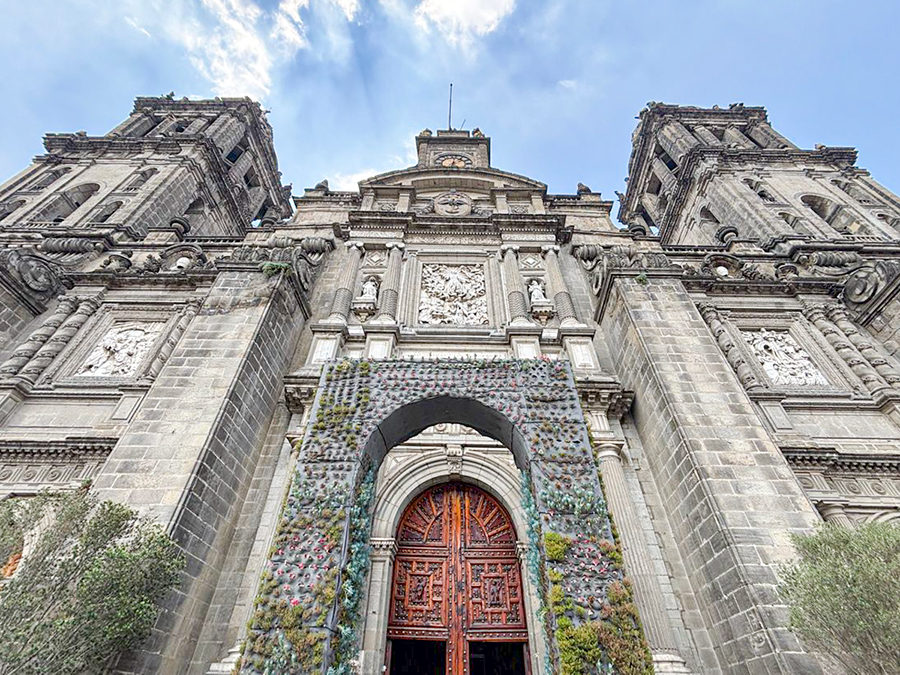
Few cities reveal themselves through a single skyline. An architectural route through Mexico City unfolds instead as a sequence of conversations between centuries, ideologies, and materials. Walking from one district to another is less about covering distance than crossing cultural epochs. Here, volcanic stone meets polished glass. Quiet courtyards interrupt grand avenues. The city invites observation rather than haste, rewarding those willing to read its buildings as chapters of an unfinished narrative.
Architecture in Mexico City is not merely a visual discipline. It is an expression of memory, identity, and everyday life. Nowhere is this dialogue more refined than in Polanco, where contemporary elegance exists beside houses that still whisper stories from another era. To understand the capital is not to count monuments, but to notice how space shapes emotion.
An Architectural Route Through Mexico City Begins with Layers
Cities are often described chronologically. Mexico City resists that logic.
Instead, it presents history simultaneously. A colonial façade stands beside modernist geometry. Art Deco apartment buildings frame minimalist galleries. Glass towers reflect jacaranda trees every spring.
This coexistence feels remarkably natural. The city never attempts to erase its previous identities. Instead, each generation adds another architectural sentence to a conversation already centuries old.
Walking becomes a form of reading.
A carved doorway reveals Spanish influence. A concrete wall speaks the language of twentieth-century optimism. A carefully restored residence transformed into a design gallery illustrates how heritage continues to evolve without nostalgia.
For visitors accustomed to cities that separate old from new, Mexico City offers something rarer: continuity.
Polanco: Contemporary Elegance Without Excess
No neighborhood embodies contemporary urban sophistication quite like Polanco.
Its broad sidewalks encourage an unhurried pace. Mature trees soften elegant residential streets, while internationally recognized architecture coexists with intimate cafés, independent bookstores, and discreet luxury boutiques.
Polanco’s appeal lies in restraint rather than spectacle.
Glass, limestone, steel, and warm wood define many of its contemporary buildings. Natural light becomes an architectural material. Landscaped courtyards create moments of silence despite the surrounding metropolis.
The district also illustrates how architecture supports lifestyle.
Morning begins with specialty coffee served beneath leafy terraces. Afternoon conversations move effortlessly between museums and galleries. Evenings transition toward restaurants where interior design receives as much attention as the cuisine itself.
Luxury here is measured not by scale but by atmosphere.
Architecture That Shapes Daily Rituals
One of Mexico City’s greatest qualities is that remarkable architecture is rarely isolated from ordinary life.
A bakery occupies a restored mansion.
A bookstore transforms an old residence into a cultural gathering place.
A contemporary restaurant preserves original architectural details while introducing modern craftsmanship.
These experiences reveal architecture as something lived rather than admired from afar.
Design influences how light enters a room, how conversations unfold around a table, how gardens soften urban density, and how silence can exist within one of the world’s largest cities.
Perhaps this explains why many visitors leave remembering feelings more vividly than individual buildings.
They remember the cool stone beneath their hands.
The scent of fresh coffee drifting into an open courtyard.
The changing afternoon light reflected across polished concrete.
Architecture becomes emotional memory.
Between Museums, Cafés, and Creative Spaces
An architectural route through Mexico City naturally intersects with culture.
Museums are not simply containers for art. Many are architectural landmarks in their own right, where the relationship between structure and exhibition becomes inseparable.
The same principle applies to the city’s independent galleries and design studios. Interiors emphasize proportion, texture, and natural materials rather than decoration. Every object appears intentionally placed.
Coffee culture also reflects this architectural awareness.
Many cafés occupy carefully restored buildings where original ceilings, stone walls, and handcrafted details remain visible. The experience extends beyond the cup itself. One notices acoustics, furniture, daylight, and spatial rhythm.
This sensitivity has become part of contemporary Mexican design philosophy.
Rather than overwhelming visitors, spaces invite contemplation.
The architecture encourages slower observation—a rare luxury within modern urban life.
Walking Between Modernism and Emotion
Mexican architecture has long balanced rational design with emotional experience.
Clean geometric lines coexist with vibrant color.
Minimalism embraces handcrafted materials.
Open courtyards create intimacy within dense neighborhoods.
Perhaps nowhere is this philosophy more evident than in works inspired by the country’s most influential architects, whose understanding of light, shadow, water, and landscape continues to shape contemporary design.
Their legacy extends far beyond iconic buildings.
It influences boutique hotels where silence feels intentional.
Private residences where gardens become living rooms.
Restaurants where architecture enhances conversation rather than distracting from it.
This emotional intelligence distinguishes Mexico City from many global capitals.
Its architecture rarely seeks attention.
Instead, it quietly changes the way people experience space.
An Architectural Route Through Mexico City Is Ultimately Personal
Every traveler discovers a different city.
Some remember extraordinary meals.
Others collect museum tickets or photographs.
Yet those who explore Mexico City through architecture often return with something less tangible.
They remember the rhythm of neighborhoods.
The unexpected calm behind heavy wooden doors.
The contrast between monumental avenues and intimate patios.
The dialogue between permanence and reinvention.
Architecture becomes a language capable of explaining the city’s contradictions without resolving them.
Mexico City does not ask visitors to admire perfection.
It invites them to appreciate complexity.
Perhaps that is why every architectural walk ends with the feeling that another remains unfinished.
Because this city never truly reveals itself all at once.
It simply offers another corner, another façade, another carefully framed view—waiting to become part of the story.
Leave a Reply