
There is a particular kind of elegance that reveals itself only to those willing to slow down. Polanco quiet design is not announced through monumental gestures or theatrical architecture. It unfolds gradually, in the rhythm of shaded sidewalks, the warmth of volcanic stone beneath afternoon light, and the careful proportion of buildings that understand restraint better than spectacle.
In Mexico City’s most sophisticated neighborhood, design rarely competes for attention. Instead, it creates an atmosphere—one that rewards observation and invites contemplation. This is where architecture becomes conversation rather than declaration, where every material, texture, and silence contributes to an experience that feels unmistakably contemporary, deeply Mexican, and remarkably timeless.
Polanco Quiet Design and the Art of Restraint
Luxury often speaks loudly. Polanco chooses another language.
Walking through the neighborhood, one notices what has been intentionally omitted. Facades resist unnecessary ornament. Gardens soften concrete without overwhelming it. Wide sidewalks encourage wandering instead of rushing. The city feels composed rather than choreographed.
This restraint reflects a broader philosophy found throughout contemporary Mexican design. Beauty emerges from proportion, craftsmanship, natural materials, and light rather than excess.
The influence of architects such as Ricardo Legorreta and the enduring legacy of Luis Barragán can still be felt—not through imitation but through shared principles. Color appears with confidence, never abundance. Walls frame light instead of blocking it. Empty space becomes an essential architectural element.
Polanco demonstrates that confidence often resides in what remains unsaid.
For visitors staying in the neighborhood, this sensibility becomes part of daily life. Morning coffee on a quiet terrace, an afternoon gallery visit, or an evening walk beneath mature jacarandas all share the same measured elegance.
Architecture That Listens Before It Speaks
Cities often reveal themselves through noise.
Mexico City reveals itself through layers.
Polanco illustrates this beautifully. Historic residences coexist beside contemporary residential towers. Boutique hotels occupy carefully restored buildings while international architects contribute new landmarks without erasing the district’s character.
The result is architectural continuity rather than contradiction.
Materials with Memory
Stone, warm woods, exposed concrete, bronze, and carefully detailed glass dominate the visual landscape. These materials age gracefully. They collect stories instead of resisting time.
Light becomes another construction material.
Morning reflections soften limestone façades. Afternoon shadows stretch across tree-lined avenues. Evening interiors glow gently behind expansive windows, suggesting life rather than displaying it.
This dialogue between architecture and natural light creates an urban experience that feels almost cinematic.
Visitors interested in this design philosophy often extend their exploration beyond Polanco toward neighborhoods such as Condesa and Roma Norte, where contemporary Mexican architecture continues similar conversations with history.
Where Coffee Becomes Design
Every sophisticated neighborhood eventually finds its gathering places.
In Polanco, many of them begin with coffee.
Independent cafés have become extensions of the neighborhood’s design identity. Interiors prioritize natural textures, carefully selected furniture, local ceramics, and quiet acoustics. Even the preparation of coffee feels architectural—precise, intentional, almost ritualistic.
These spaces are not designed for speed.
They encourage lingering.
A conversation unfolds slowly beside a handcrafted espresso. Designers sketch ideas. Writers revise paragraphs. Architects discuss projects over filter coffee prepared with remarkable patience.
The atmosphere reflects an emerging vision of Mexican luxury.
Not consumption.
Presence.
Coffee culture here connects naturally with local craftsmanship, sustainable sourcing, and contemporary gastronomy. The experience extends beyond taste toward an appreciation of process, material, and community.
Readers interested in Mexico City’s evolving culinary identity may also enjoy exploring how gourmet markets have redefined contemporary luxury and how neighborhood cafés have become cultural salons in their own right.
Museums That Whisper Instead of Shout
Design in Polanco extends beyond architecture into its cultural institutions.
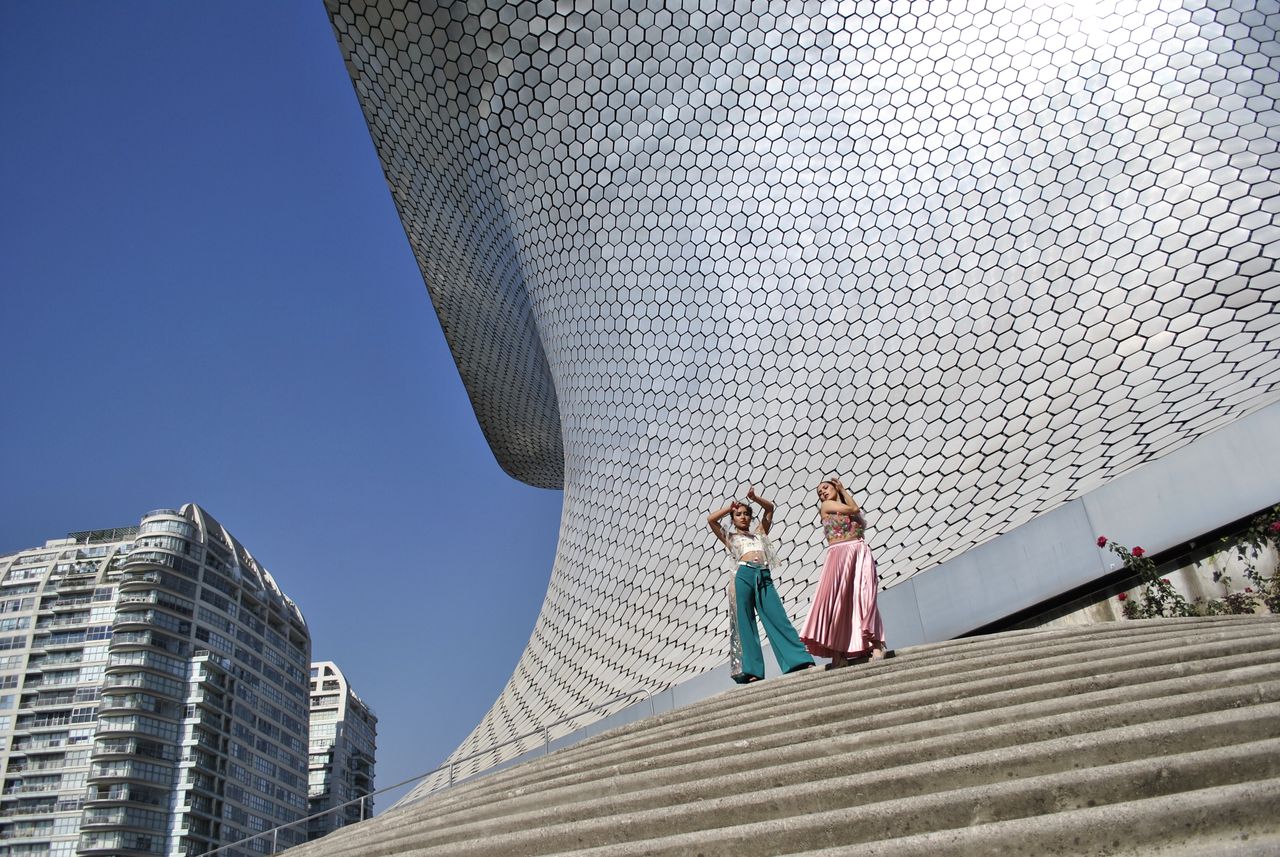
Few museums demonstrate this better than the Museo Jumex, where minimalist architecture creates generous space for contemporary artistic dialogue. Nearby, the Museo Soumaya introduces an entirely different architectural language, transforming reflective surfaces into a constantly changing urban sculpture.
A short walk away, the Museo Nacional de Antropología reminds visitors that Mexican design has always drawn strength from centuries of cultural continuity rather than fashionable reinvention.
Together, these institutions present different interpretations of space, memory, and identity.
Art does not interrupt the neighborhood.
It completes it.
The experience feels distinctly urban yet deeply connected to Mexican history.
Visitors often discover that an afternoon spent moving quietly between architecture, sculpture, and carefully landscaped public spaces becomes one of the city’s most memorable experiences.
Living Well Without Performing Luxury
Perhaps Polanco’s greatest lesson is that sophistication does not require performance.
The neighborhood rarely feels interested in proving itself.
Restaurants value thoughtful hospitality over spectacle. Boutiques emphasize craftsmanship rather than logos. Residential streets remain surprisingly peaceful despite existing within one of Latin America’s largest metropolitan areas.
This balance reflects something essential about contemporary Mexico City.
The capital has matured into a global cultural destination without abandoning its own identity. International influences are welcomed, yet they are absorbed through a distinctly Mexican perspective—one grounded in hospitality, craftsmanship, food, architecture, and everyday rituals.
Design here serves life rather than image.
That distinction matters.
It transforms luxury from an object into an atmosphere.
Readers exploring the city’s broader creative landscape may also appreciate discovering Mexico City’s architectural dialogue between Barragán and Legorreta or understanding how gastronomy has become one of the capital’s strongest expressions of cultural identity.
The Quiet Confidence of a City That Knows Itself
Cities rarely become unforgettable because they are loud.
They become unforgettable because they possess character.
Polanco demonstrates that confidence can exist without extravagance. It reminds us that architecture shapes emotion as much as skylines. That design succeeds when it quietly improves everyday life. That beauty often resides in proportion, silence, texture, and light rather than spectacle.
Perhaps this is why the neighborhood leaves such a lasting impression.
Its buildings never compete for attention.
Its cafés encourage conversation instead of urgency.
Its museums invite reflection rather than distraction.
And its streets reveal that the highest form of luxury may simply be thoughtful design lived at a human scale.
In Polanco, design speaks softly.
Those willing to listen discover that it says everything.
Leave a Reply