
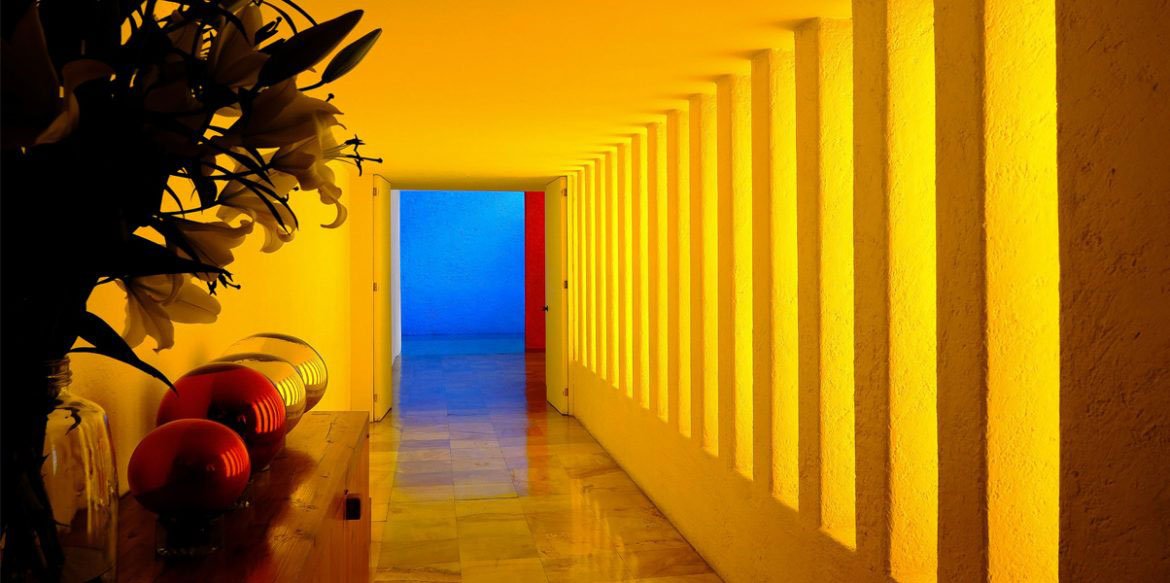
There are cities that impress through scale. Others through history. Mexico City does something rarer. It moves people through atmosphere. The influence of Barragán Legorreta architecture can be felt throughout the capital, not only in celebrated buildings but in the emotional way many residents experience space itself. Light becomes a material. Color becomes memory. Silence becomes design. Architecture is no longer an object to admire from a distance. It becomes a conversation between the city and the individual.
For visitors arriving in Polanco, this emotional dimension often appears unexpectedly. A wall catches the afternoon sun. A courtyard frames a jacaranda tree. A passageway slows the pace of a hurried day. These moments reveal a uniquely Mexican architectural philosophy, one shaped profoundly by the visions of Luis Barragán and Ricardo Legorreta.
Their legacy extends far beyond buildings. It continues to define how contemporary Mexico expresses beauty, identity, and emotional connection through space.
Barragán Legorreta Architecture and the Art of Feeling
Modern architecture is often discussed through function, technology, or aesthetics. Barragán and Legorreta approached the discipline differently. They understood architecture as an emotional experience.
For Luis Barragán, architecture was inseparable from contemplation. Influenced by Mexican landscapes, religious symbolism, and traditional haciendas, he created environments that encouraged reflection rather than spectacle. Walls appeared monumental yet intimate. Colors felt simultaneously bold and serene.
His most celebrated work, the Casa Luis Barragán, remains one of the world’s most significant architectural landmarks. Walking through its rooms reveals an extraordinary understanding of light, shadow, texture, and proportion.
Ricardo Legorreta inherited this emotional sensibility while introducing a more contemporary and urban language. His projects expanded Barragán’s philosophy into hotels, civic buildings, universities, and international commissions. Large geometric forms, saturated colors, and dramatic courtyards became signatures of an architecture that felt unmistakably Mexican while remaining globally relevant.
Together, they demonstrated that modernism did not have to abandon emotion. Instead, emotion could become the foundation of design.
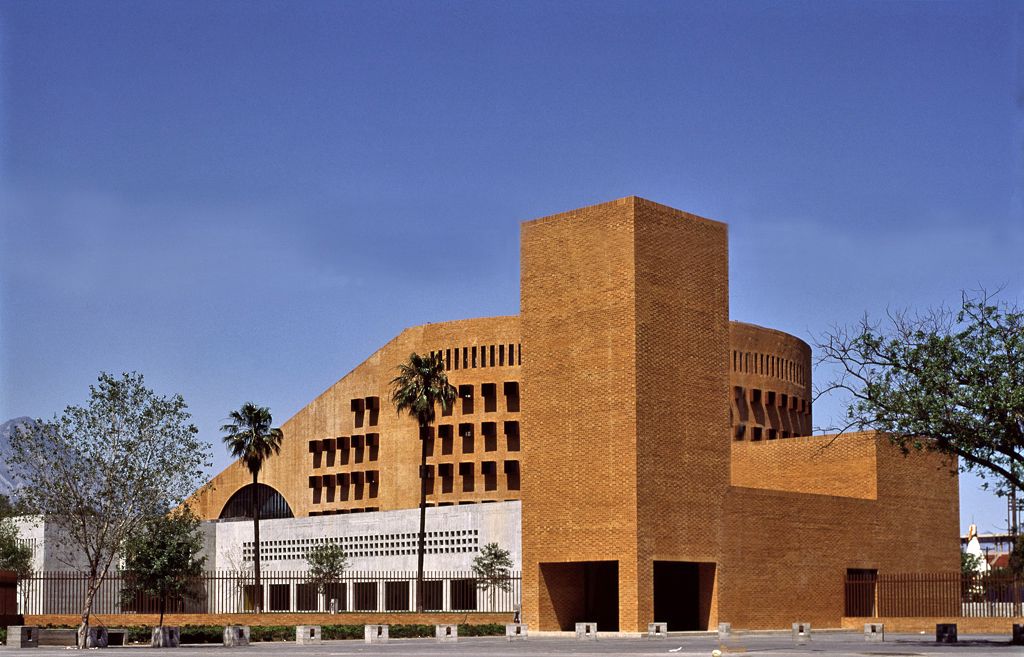
The Color of Memory
Why Mexican Architecture Speaks Through Color
In many cultures, color serves decoration. In Mexico, color often carries emotional and cultural meaning.
Barragán’s pink walls, golden courtyards, and cobalt surfaces transformed architecture into a sensory experience. Legorreta continued this tradition with compositions that felt simultaneously contemporary and deeply rooted in Mexican identity.
Walking through Mexico City, traces of this philosophy appear everywhere. The warm tones of residential façades. The vibrant surfaces of cultural institutions. The careful relationship between sunlight and pigment.
Color functions as memory. It evokes landscapes, traditions, and emotional states. It creates a connection between architecture and the human experience.
This approach stands in contrast to the neutral palettes that dominated much twentieth-century international design. Mexican architecture reminds us that sophistication does not require restraint. It requires intention.
The result is a built environment that feels personal rather than purely visual.
Polanco: Contemporary Luxury Through Architectural Awareness
Polanco often receives attention for its restaurants, galleries, and luxury boutiques. Yet one of its most compelling qualities is architectural.
The neighborhood reveals how contemporary Mexico balances global sophistication with local identity. Glass towers stand alongside tree-lined avenues. International brands coexist with independent design studios. Historic residences share streets with ambitious new developments.
The influence of emotional architecture can still be felt here.
A carefully designed terrace overlooking a quiet street. A boutique café where natural light defines the atmosphere. A gallery whose spatial composition becomes part of the artistic experience.
Luxury in Polanco increasingly revolves around quality of experience rather than visible excess. Architecture plays a central role in this shift.
Residents and visitors alike seek spaces that offer calm, beauty, and meaning within an intensely dynamic metropolis. In many ways, this reflects the lessons taught by Barragán and Legorreta decades ago.
The most memorable environments are those that create emotional resonance.
Coffee, Design, and the Contemporary Ritual of Space
Architecture rarely exists in isolation.
Its influence extends into everyday rituals, from morning coffee to afternoon conversations and evening gatherings. Across Mexico City, cafés, design stores, and cultural venues increasingly embrace principles associated with emotional architecture.
Natural materials replace synthetic surfaces. Courtyards encourage pauses. Light becomes an active participant in the experience.
A cup of coffee tastes different when consumed within a thoughtfully designed space. Art feels more immersive when architecture frames the encounter. Even conversation changes when environments invite presence rather than distraction.
This intersection of gastronomy, design, and architecture has become a defining characteristic of contemporary urban culture in Mexico City.
It explains why architecture enthusiasts often find themselves discussing restaurants, bookstores, and galleries as much as buildings.
The emotional quality of a city emerges through these interconnected experiences.
For those interested in exploring this relationship further, institutions such as the Fundación Casa Luis Barragán, the Museo Tamayo, and the Museo Jumex offer valuable perspectives on how design, art, and urban life continue to shape Mexico City’s cultural identity.
A Global Influence Rooted in Mexico
The international architecture community frequently references Barragán and Legorreta when discussing sensory design, regional modernism, and place-based architecture.
Yet their enduring relevance lies in something deeper.
They resisted the idea that architecture should feel universal. Instead, they argued that meaningful design emerges from culture, climate, memory, and human emotion.
Today, architects across the world revisit these principles as cities seek greater authenticity and human connection.
The legacy of Mexican emotional architecture appears in luxury hospitality, residential design, wellness environments, and cultural institutions from North America to Asia.
What began as a distinctly Mexican conversation has become a global one.
Yet nowhere does it feel more powerful than in Mexico City itself.
The City as an Emotional Composition
Every great city possesses a defining rhythm.
Paris unfolds through elegance. Tokyo through precision. New York through energy.
Mexico City reveals itself through emotion.
Its architecture invites observation rather than consumption. It encourages presence rather than speed. It transforms ordinary moments into memorable experiences through color, light, texture, and atmosphere.
The work of Barragán and Legorreta remains essential because it captures this spirit with remarkable clarity.
Their buildings remind us that architecture is not merely about what we see.
It is about what we feel.
And in a city where memory, culture, and contemporary life constantly intersect, that emotional dimension may be Mexico City’s most enduring luxury.
Leave a Reply