
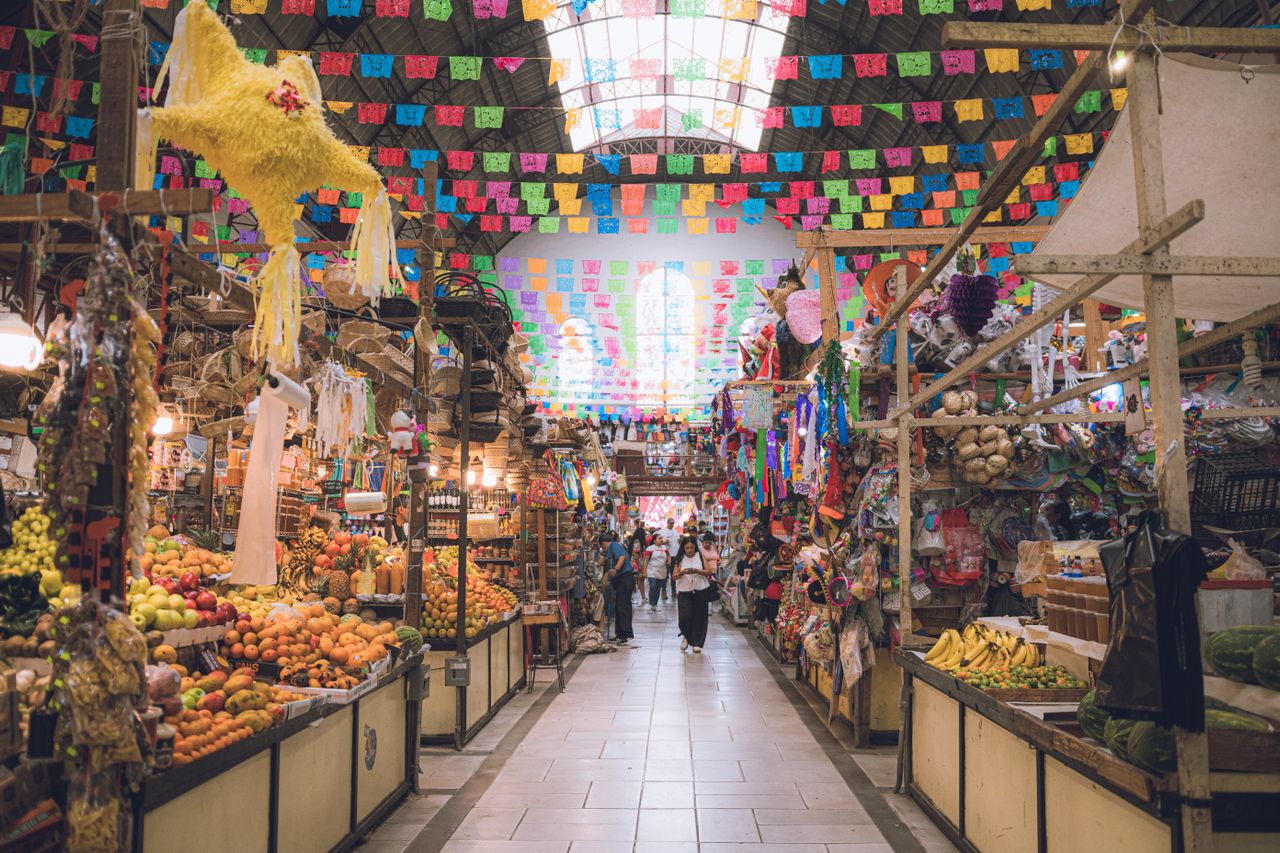
In Polanco gourmet markets Mexican luxury, the city reveals itself not through monuments or grand avenues, but through the quiet choreography of food, design, and daily ritual. Mexico City no longer simply consumes—it curates.
At street level, Polanco does not announce its sophistication loudly. It whispers it through polished stone façades, discreet signage, and the soft hum of conversations drifting from glass-walled delis and artisanal counters. Inside these spaces, luxury is no longer defined by exclusivity alone, but by proximity: to origin, to craft, to intention.
The gourmet market has become the city’s most eloquent architecture of desire.
Polanco Gourmet Markets Mexican Luxury as a New Urban Ritual
To understand Polanco gourmet markets Mexican luxury, one must first abandon the idea of markets as purely functional spaces. In Mexico City today, they operate as cultural theatres—carefully composed environments where gastronomy, design, and social identity intersect.
Walk into a curated market in Polanco and the sensory field changes immediately. Light is softened by wood and brass. Produce is displayed like still-life composition rather than inventory. A loaf of sourdough is not simply bread; it is a narrative of fermentation, patience, and imported grain philosophies. A bottle of mezcal is not a product, but a geography bottled.
Here, luxury is not abundance. It is attention.
This shift mirrors a broader transformation in Mexico City’s cultural identity. The city is no longer defined only by its historical depth, but by its ability to reinterpret that depth through contemporary living. Institutions such as the Museo Jumex and Museo Soumaya have already shown how architecture can become a language of modern Mexican identity. Gourmet markets now extend that language into everyday life.
Within walking distance of Paseo de la Reforma, Polanco’s markets echo the same design intelligence: clarity of form, restraint of gesture, and a subtle dialogue between global influence and local memory.
This is where OLIVER Luxury Experiences situates itself—not as a hotel in the traditional sense, but as part of this evolving urban grammar. A place where the city is not observed from a distance, but tasted, slowly, deliberately.
The Architecture of Taste and the Geography of Desire
Mexico City has always been a city of layers. Aztec foundations beneath colonial grids beneath modernist ambition. Gourmet markets now add another layer: the architecture of taste.
In Polanco, materials matter as much as menus. Concrete meets oak. Glass reflects movement rather than containing it. Even refrigeration becomes invisible, allowing color and texture to dominate perception. This is not accidental design—it is editorial space planning.
Markets such as those influenced by the broader ecosystem of Mercado Roma represent a shift in how food is staged. The vendor is no longer a stallholder but a micro-entrepreneur of narrative. Each counter becomes a chapter in a larger story about sourcing, ethics, and aesthetics.
Beyond Polanco, traditional food institutions like the Mercado de San Juan remind us that Mexico’s culinary intelligence has always been rooted in complexity. What has changed is not the depth of that intelligence, but its framing.
Even the act of shopping becomes spatial choreography. You move through scent zones: citrus, smoked chili, aged cheese, freshly ground coffee. Time slows. Conversation becomes more intentional. The city, often defined by its velocity, briefly recalibrates itself around texture and aroma.
Nearby cultural anchors reinforce this atmosphere. The monumental presence of the Museo Tamayo and the architectural openness of Museo de Arte Moderno reflect a city that understands how aesthetics shape perception. Gourmet markets, in their own way, are everyday extensions of that curatorial impulse.
Polanco Gourmet Markets Mexican Luxury and the Emotional Intelligence of Eating
There is a quieter dimension to Polanco gourmet markets Mexican luxury that is often overlooked: its emotional intelligence.
To eat in these spaces is to participate in a form of urban mindfulness. Not in the performative sense of wellness culture, but in something more grounded. You are aware of origin, labor, and of your own presence within a system of exchange that feels both global and intimate.
A simple espresso becomes a study in temperature and timing. A plate of seasonal fruit becomes an exercise in restraint. Even conversation shifts—less performative, more observational.
This emotional refinement reflects a broader evolution in Mexico City’s cosmopolitan identity. The city is no longer just absorbing global influence; it is filtering it. It decides what to keep, what to reinterpret, and what to leave behind.
Polanco, in particular, has become a laboratory for this selective modernity. It is where architecture, gastronomy, and lifestyle intersect without collapsing into spectacle. It is also where internal narratives matter most: the sense of belonging to a city that is constantly rewriting itself.
In this context, OLIVER Luxury Experiences exists as a pause within motion. A place where the city’s intensity is not avoided but refined into experience. Guests are not separated from Mexico City; they are placed closer to its most curated expressions.
The Quiet Future of Urban Luxury
The future of luxury in Mexico City will not be defined by scale or spectacle. It will be defined by discernment.
Gourmet markets in Polanco already suggest this direction. They are not destinations in the traditional sense. As they are atmospheres., reward attention, not urgency. And they invite participation rather than consumption.
To move through them is to understand a different kind of urban intelligence—one that values composition over accumulation, and meaning over excess.
Mexico City has always been a city of contrasts. Ancient and modern. Intense and intimate. Chaotic and deeply ordered. Gourmet markets do not resolve these contrasts. They hold them in balance.
And perhaps that is the most contemporary form of luxury available today: the ability to remain present within complexity without needing to simplify it.
Conclusion: A City Tasted, Not Just Seen
In the end, Polanco gourmet markets Mexican luxury is not about food alone. It is about how a city chooses to present itself to those who pay attention.
You do not consume Mexico Ciity quickly. You read it slowly—through architecture, through markets, through moments of stillness between conversations. It pushes you to live to the fullest
And in that slow reading, something becomes clear: luxury here is no longer an object. It is a rhythm.
Leave a Reply