
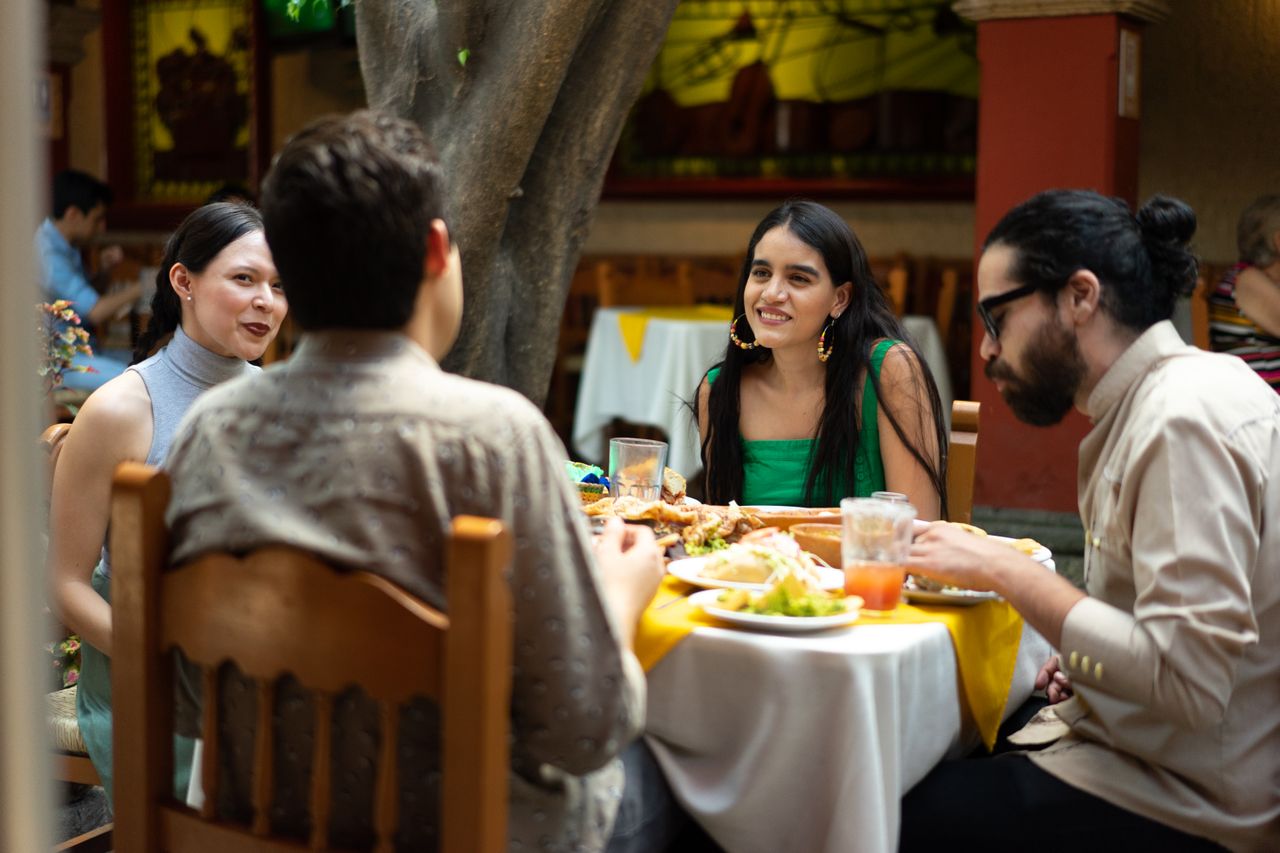
Some cities are remembered through monuments. Others through music. Yet the restaurants that define the gastronomic conversation in Mexico City tell a more nuanced story—one that unfolds across tasting menus, market traditions, architecture, and the rituals of gathering around a table. Here, cuisine is neither performance nor nostalgia. It is language. A constantly evolving dialogue between memory and reinvention. Lets talk about the Restaurants That Define the Gastronomic Conversation in Mexico City.
Mexico City has reached a point where it no longer needs to explain itself. Its culinary scene has moved beyond trends and accolades into something more enduring. Restaurants have become cultural institutions. Chefs have become interpreters. Diners, meanwhile, participate in a city-wide conversation that stretches from ancient ingredients to contemporary design.
And nowhere does that conversation feel more alive than in Polanco.
The Restaurants That Define the Gastronomic Conversation in Mexico City Today
Mexico City has always eaten well. What changed over the last two decades was the confidence with which it began presenting its own identity.
Long before international rankings noticed, markets, fondas, and family kitchens had preserved a culinary intelligence that resisted simplification. The city’s contemporary chefs simply gave it a new vocabulary.
Today, restaurants in Mexico City are less concerned with impressing outsiders than with asking better questions. What does modern Mexican cuisine mean? How should indigenous ingredients be interpreted? Where does technique end and emotion begin?
The answers vary. That is precisely the point.
Pujol and the Art of Memory
Few restaurants have influenced contemporary Mexican cuisine like Pujol.
Located in Polanco, the restaurant led by Chef Enrique Olvera became known not because it chased novelty, but because it embraced continuity. Its famous mole madre—a sauce continuously nurtured for years—embodies a philosophy rather than a recipe.
Inside, architecture and restraint matter as much as flavor. Light filters softly across natural materials. Conversations remain measured. The experience feels more like attending an intimate performance than dining.
Pujol transformed the way Mexico looked at itself. International recognition simply followed.
Quintonil and the Language of Ingredients
Just a few blocks away, Quintonil speaks in quieter tones.
Chef Jorge Vallejo approaches ingredients with remarkable precision. Native herbs, vegetables and forgotten flavors emerge without unnecessary complexity. The result is elegant without becoming precious.
The room itself mirrors that sensibility. Open spaces. Natural textures. Subtle confidence.
In a city famous for excess, Quintonil demonstrates that sophistication often lies in restraint.
Beyond Fine Dining: Where Mexico City Continues the Conversation
Luxury in Mexico City rarely announces itself loudly.
Instead, it appears in places where authenticity and craftsmanship intersect.
Rosetta, set inside a beautiful mansion in Roma Norte, allows Italian traditions to converse with Mexican produce. Máximo Bistrot brings seasonal spontaneity into a relaxed setting that feels unmistakably urban. Contramar, meanwhile, has elevated seafood lunches into something approaching a social institution.
None of these restaurants feel interchangeable. Each contributes a different chapter to the city’s culinary identity.
And perhaps that diversity explains why Mexico City continues to fascinate.
Markets as Cultural Archives
The real conversation extends far beyond white tablecloths.
Mercado de San Juan remains a paradise for chefs and curious gourmands. Mercado Medellín offers aromas that reveal Mexico City’s long-standing dialogue with Latin America. Even neighborhood tortillerías preserve techniques that are older than many nations.
The city understands something profound.
Innovation without roots becomes fashion. Tradition without evolution becomes nostalgia.
Mexico City chooses neither. It prefers continuity.
The Architecture of Dining
Restaurants in Mexico City are increasingly about atmosphere.
Design matters. Acoustics matter. Lighting matters.
Dining has become a multisensory experience.
Polanco, in particular, reflects this new sophistication. Tree-lined streets lead to discreet façades where architects collaborate with chefs and interior designers. Spaces feel residential rather than theatrical. Materials remain honest. Wood, stone and natural textiles replace ornament for ornament’s sake.
A meal unfolds slowly. A conversation lingers.
Nothing feels rushed.
The city has learned that elegance rarely depends on extravagance.
Polanco as a Cultural Dining District
Polanco occupies a unique place in the geography of Mexico City.
It is international without losing its local rhythm. Embassies, galleries, museums and restaurants coexist naturally. Residents share sidewalks with visiting executives, diplomats and artists.
Lunch meetings become cultural encounters. Dinner reservations evolve into long evenings.
Perhaps that explains why so many defining restaurants have chosen this neighborhood as home.
From OLIVER Luxury Experiences, the city reveals itself not through itineraries, but through moments. A morning walk beneath jacaranda trees. An exhibition at Museo Jumex. A martini before dinner. A conversation that continues long after dessert.
Luxury, after all, is often measured by time.
The Restaurants That Define the Gastronomic Conversation in Mexico City Tomorrow
The most exciting aspect of Mexico City’s culinary scene is that it remains unfinished.
Young chefs continue opening intimate projects. Neighborhoods evolve. Ancient ingredients find new expressions. International influences arrive, yet rarely dominate.
The city absorbs. Adapts. Reinvents.
Unlike other gastronomic capitals that depend on prestige, Mexico City thrives on curiosity.
Its greatest restaurants understand that cuisine is ultimately about identity.
Not static identity.
Living identity.
And perhaps that is why dining here feels so emotional.
Every plate contains echoes of migration, memory, geography and imagination. As well, every room becomes a stage for human connection. Every evening contributes another sentence to an ongoing conversation.
A City Best Understood Through Its Tables
Cities reveal themselves differently depending on how one chooses to experience them.
Mexico City rewards those who linger.
Those who prefer conversations over checklists. Also those who understand that culture lives not only inside museums, but also inside kitchens. Those who appreciate that luxury is less about spectacle and more about access—to ideas, traditions and moments that cannot be replicated elsewhere.
The restaurants that define the gastronomic conversation in Mexico City are not merely destinations.
They are expressions of a city that continues to reinvent itself while remaining profoundly rooted in its own history.
And from the quiet sophistication of Polanco, OLIVER Luxury Experiences offers something increasingly rare.
Not simply accommodation.
But a gateway into the living culture of one of the world’s most compelling cities.
Leave a Reply