
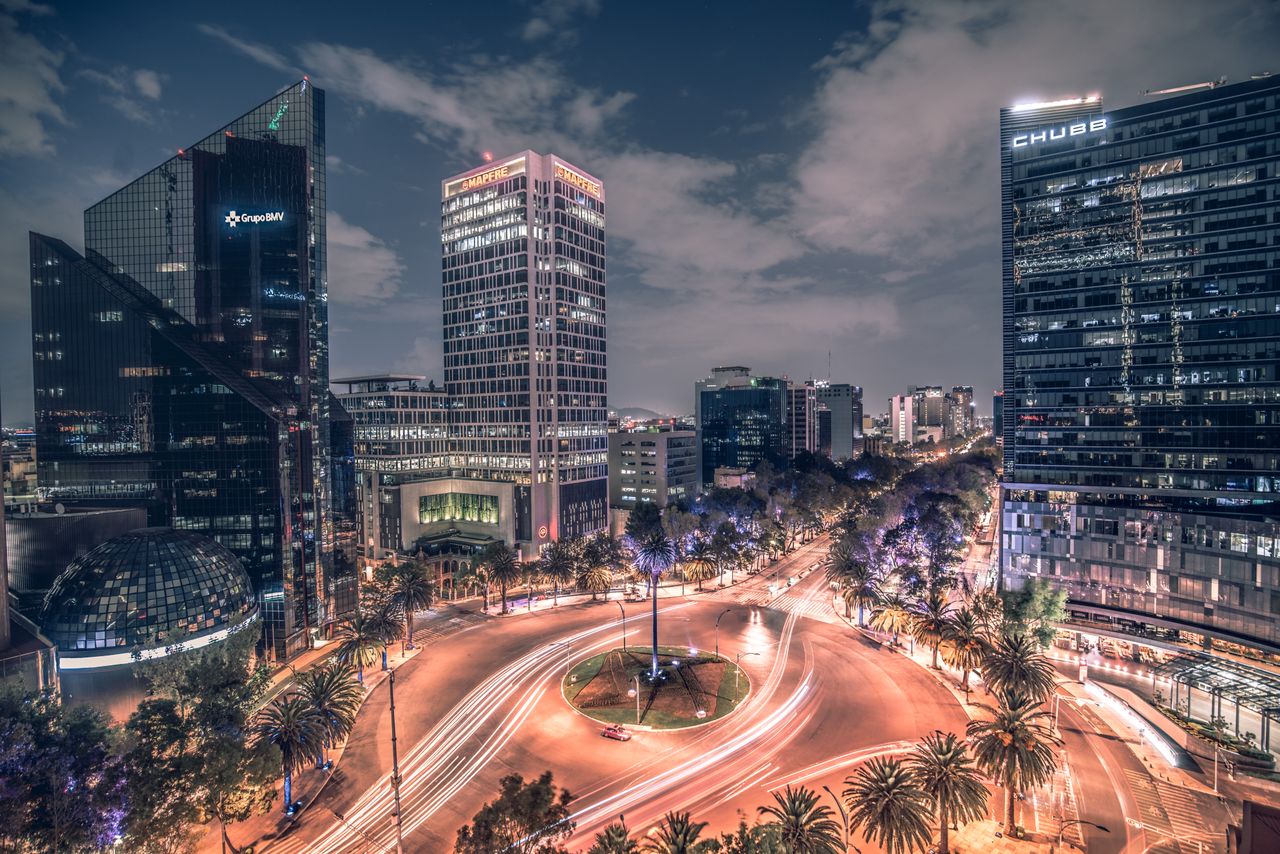
Night arrives slowly in Mexico City. It begins as a soft transition. The last golden reflections disappear from the glass towers of Polanco. Traffic loses its daytime urgency. Restaurant terraces fill with conversations that stretch beyond dinner. Somewhere in the distance, church bells mark an hour that few people notice.
Then midnight arrives.
And with it, a different city emerges.
The phrase Life after midnight in México City suggests nightlife, but that interpretation barely scratches the surface. What unfolds after midnight is not simply entertainment. It is a transformation of rhythm, perception, and atmosphere. The city becomes quieter in some places, more intense in others. It sheds its professional identity and reveals something deeper: a cultural capital that never fully sleeps because creativity, memory, and human connection continue long after business hours have ended.
For those willing to stay awake, Mexico City offers one of the world’s most sophisticated nocturnal experiences.
Life After Midnight in México City: A Different Urban Tempo
Most great cities possess a nighttime personality.
Paris becomes romantic. New York sharpens its energy. Tokyo grows more intimate.
Mexico City does something else entirely.
It becomes reflective.
The vast scale of the metropolis remains present, yet the noise recedes. Historic facades illuminated by warm streetlights feel almost cinematic. The avenues around Polanco and Reforma acquire a slower cadence. Even the air seems to change.
The city’s nighttime culture has deep roots. For centuries, Mexico City’s social life extended beyond sunset. Colonial salons, literary gatherings, artistic circles, and late-night cafés helped shape an urban culture where conversation often mattered as much as spectacle.
That tradition survives.
Today, architects, chefs, artists, entrepreneurs, and musicians continue gathering long after midnight. The city’s creative ecosystem does not operate according to conventional schedules. Some of its most interesting ideas emerge during late dinners, intimate concerts, and conversations that begin unexpectedly.
Visitors seeking a deeper understanding of the city often discover it after dark.
The Architecture of Night
When Buildings Become Atmosphere
During daylight hours, architecture demands attention.
At night, architecture creates mood.
Mexico City’s architectural richness becomes especially compelling after midnight. Modernist masterpieces, Art Deco residences, contemporary towers, and historic landmarks exist within the same visual landscape.
Along the elegant streets of Polanco, carefully designed facades reveal subtle details often overlooked during the day. Stone textures become more pronounced. Light reflects differently from glass and metal. Shadows create depth where daylight created clarity.
The city’s relationship with architecture has always reflected its layered identity. Ancient foundations support colonial structures. Twentieth-century modernism stands beside contemporary design.
After midnight, those eras appear to coexist.
For travelers interested in architecture in Mexico City, nighttime walks offer a uniquely emotional perspective. Buildings stop functioning as landmarks and begin functioning as characters within a larger urban narrative.
Gastronomy Beyond the Dinner Reservation
The Long Table Culture of Mexico City
Some cities eat late.
Mexico City lingers.
One of the defining characteristics of the capital’s gastronomic culture is its resistance to rushing. Meals frequently extend into conversations. Conversations evolve into ideas. Ideas become friendships, collaborations, or memories.
This rhythm feels particularly evident after midnight.
In Polanco, Roma, Condesa, and Centro Histórico, restaurants, cocktail bars, and intimate lounges continue welcoming guests who understand that dining represents far more than consumption.
The city’s culinary evolution has transformed it into one of the world’s most exciting gastronomic destinations. Yet its greatest luxury remains remarkably simple: time.
A beautifully prepared meal accompanied by thoughtful conversation often becomes the evening’s central experience.
For readers exploring Mexico City gastronomy, the most memorable moments frequently occur after the official meal has ended.
The final glass. The unexpected recommendation. The conversation that continues well past midnight.
Those moments rarely appear in guidebooks.
Art Never Keeps Office Hours
Creativity in the Night
Mexico City has always attracted artists.
From muralists and architects to contemporary designers and filmmakers, generations of creative minds have found inspiration within its complexity.
After midnight, that creative energy remains visible.
Independent galleries host evening openings. Cultural spaces organize experimental performances. Small venues present jazz, electronic music, and interdisciplinary projects that resist easy categorization.
Even the city’s museums contribute to this relationship with the night. Institutions such as Museo Jumex and Museo Nacional de Antropología regularly extend cultural programming through special events, lectures, and exhibitions.
The result is a city where culture feels alive rather than preserved.
Visitors interested in art and museums in Polanco often discover that the surrounding conversations, dinners, and encounters become just as meaningful as the exhibitions themselves.
Art here exists within a broader cultural ecosystem.
And that ecosystem remains active long after midnight.
The Luxury of Anonymity
Perhaps the greatest luxury Mexico City offers after midnight is privacy.
Not isolation.
Privacy.
The city grants space for observation without demanding participation. One can sit quietly at a terrace café. Walk through nearly empty streets. Listen to distant music drifting through open windows.
In a world increasingly dominated by visibility, Mexico City still permits anonymity.
That quality attracts a remarkably diverse population of residents and visitors. Diplomats, artists, executives, academics, entrepreneurs, and travelers share the same urban landscape without performing for one another.
The experience feels particularly powerful in Polanco, where cosmopolitan sophistication exists alongside genuine neighborhood life.
Luxury here often manifests not through excess but through freedom.
Freedom to wander, freedom to observe, freedom to remain present.
The City Between Two Days
A Moment of Urban Poetry
The most beautiful hour in Mexico City may not be midnight itself.
It may be the hour that follows.
Around one or two in the morning, the city enters a rare state of equilibrium. Restaurants begin winding down. Streets grow quieter. Light reflects softly across pavements still carrying the warmth of the day.
This transitional moment reveals something essential about the capital.
Mexico City has never been defined by a single identity. It exists between histories, cultures, social worlds, architectural eras, and personal narratives.
After midnight, those layers become easier to perceive.
The city stops explaining itself.
It simply exists.
For travelers seeking meaningful cultural experiences in Mexico City, these moments often become the most memorable. Not because they are dramatic, but because they feel authentic.
They offer access to the emotional texture of the city itself.
Conclusion: The City That Stays Awake for the Right Reasons
Many cities celebrate nightlife.
Mexico City celebrates life.
That distinction matters.
The true beauty of Life after midnight in México City lies not in spectacle but in depth. The city continues because its conversations continue. Its creativity continues. Its curiosity continues.
After midnight, Mexico City reveals a version of itself that feels more intimate, more thoughtful, and perhaps more honest.
For guests staying in the heart of Polanco, this experience remains remarkably accessible. Step outside, follow the rhythm of the streets, and allow the city to unfold at its own pace.
You may discover that Mexico City’s most memorable hours begin precisely when the day appears to end.
Leave a Reply