
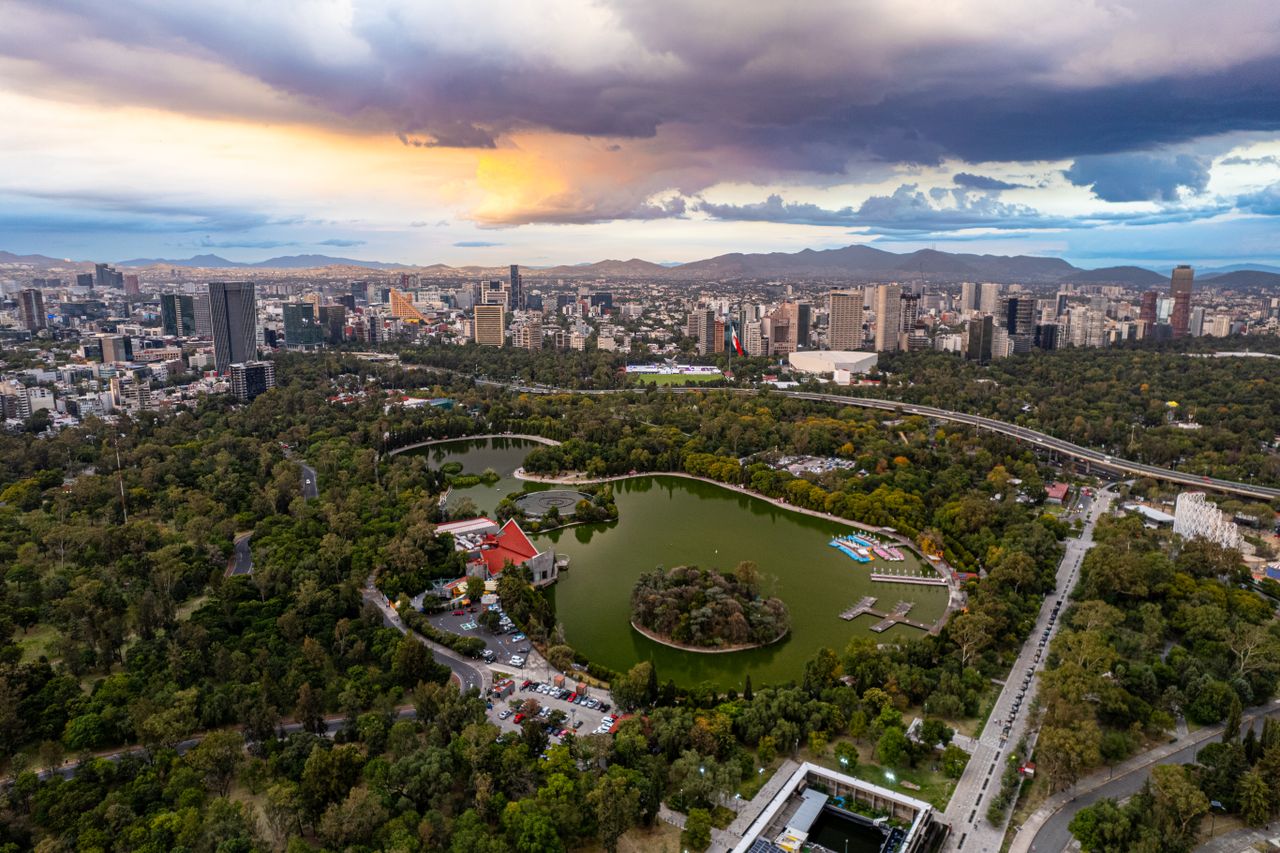
There are cities that reveal themselves through monuments, and there are cities that reveal themselves through movement. Here is a guide to getting to know Polanco.
Mexico City belongs firmly to the latter.
Its true character emerges not from a checklist of landmarks but from a succession of moments: a conversation overheard in a café, a hidden courtyard behind a stone façade, the scent of jacaranda blossoms drifting across a quiet avenue. And nowhere is this more evident than in Polanco.
For travelers interested in getting to know Polanco, the greatest luxury may not be having a plan at all. It may be allowing the neighborhood to unfold slowly, one unexpected discovery at a time.
In a world increasingly organized around efficiency, Polanco remains wonderfully resistant to complete understanding. It rewards curiosity. It favors wandering over rushing. And it offers a rare invitation: the opportunity to become temporarily lost in one of the world’s most sophisticated urban landscapes.
Getting to Know Polanco Beyond the Obvious
At first glance, Polanco appears remarkably composed.
Tree-lined streets. Elegant architecture. Refined boutiques. Restaurants that routinely appear on international rankings. Luxury residences hidden behind carefully maintained façades.
Yet beneath this polished exterior lies a neighborhood shaped by layers of history, migration, design, and cultural ambition.
Developed during the first half of the twentieth century on land that once formed part of the historic Hacienda de los Morales, Polanco became a canvas for Mexico’s emerging modern identity. Architects experimented with international influences while adapting them to local sensibilities. European inspiration met Mexican creativity.
The result remains visible today.
A single walk may reveal Art Deco details beside contemporary minimalism. Mid-century residences coexist with ambitious new towers. Historic mansions house galleries, design studios, and restaurants.
Polanco never feels frozen in time.
Instead, it feels alive.
That constant evolution forms part of its allure.
The Pleasure of Taking the Long Way
Streets Designed for Discovery
Some neighborhoods are destinations.
Polanco is a journey.
The pleasure begins the moment one abandons the most direct route.
A stroll along Avenida Presidente Masaryk may lead toward luxury storefronts and international fashion houses. Yet the real discoveries often wait one street away.
Quiet residential avenues reveal elegant homes hidden behind lush gardens. Small cafés appear where none seemed possible. Bookstores invite spontaneous detours. Local galleries occupy spaces that barely announce themselves.
The neighborhood rewards those willing to walk without urgency.
Morning light filters through mature trees. Afternoon shadows stretch across stone sidewalks. In the evening, warm illumination transforms entire streets into cinematic scenes.
Each hour offers a different version of the same neighborhood.
And each version feels equally compelling.
The Art of Observing
Polanco encourages a slower form of attention.
Watch how residents move through the neighborhood.
A businessman pauses for an espresso. An architect studies a building façade. Friends gather for a late lunch that gradually extends into the afternoon.
The rhythm feels distinctly urban yet surprisingly human.
Despite its international profile, Polanco retains an intimacy that many global luxury districts have lost.
It remains a place where people actually live.
That authenticity shapes every encounter.
Architecture as a Living Conversation
One of the most fascinating aspects of getting to know Polanco lies in observing its architectural dialogue.
The neighborhood functions as an open-air archive of Mexico City’s cultural evolution.
Between Modernism and Memory
Modernist principles appear throughout Polanco, yet they rarely feel rigid.
Architects embraced clean lines, geometric forms, and generous proportions while preserving a sense of warmth and context. Buildings respond to climate, light, and landscape rather than imposing themselves upon them.
Many contemporary projects continue this tradition.
Glass, stone, wood, and concrete interact with remarkable restraint. Luxury often expresses itself through proportion rather than ornament.
This architectural confidence mirrors a broader characteristic of Mexico City itself.
The city rarely needs to announce its sophistication.
It simply possesses it.
For guests interested in exploring architecture in Mexico City, Polanco offers one of the most rewarding urban classrooms anywhere in the Americas.
The Gastronomic Geography of Polanco
Food serves as one of the most direct ways to understand a city.
In Polanco, gastronomy becomes a cultural language.
The neighborhood gathers extraordinary culinary diversity within a remarkably walkable area. Traditional Mexican techniques coexist with global influences. Innovation respects heritage rather than replacing it.
A City Through Its Table
Breakfast may begin with artisan coffee and freshly baked pastries. Lunch could explore contemporary Mexican cuisine informed by regional traditions. Dinner often becomes an immersive experience where storytelling, design, and hospitality converge.
Yet the most memorable moments frequently occur between meals.
A hidden wine bar.
An intimate bakery.
A neighborhood market.
A conversation with a chef passionate about indigenous ingredients.
These experiences reveal why Mexico City has emerged as one of the world’s most influential culinary capitals.
For travelers seeking deeper insights into Mexico City gastronomy, Polanco provides an ideal starting point, though never a final destination.
The city always invites further exploration.
Culture Around Every Corner
Polanco’s cultural significance extends far beyond commerce and cuisine.
Its proximity to some of Latin America’s most important cultural institutions creates an atmosphere where art, history, and contemporary thought remain part of everyday life.
Where Curiosity Leads
A morning may begin inside the renowned Museo Nacional de Antropología, exploring civilizations that shaped an entire continent.
An afternoon might continue through the contemporary exhibitions of Museo Tamayo.
Nearby green spaces encourage reflection between experiences, creating a rhythm that feels both intellectual and restorative.
This accessibility to culture influences the neighborhood itself.
Conversations often drift toward art, architecture, design, literature, and ideas.
Polanco feels connected not only to Mexico City’s cultural ecosystem but also to broader global conversations.
For visitors interested in art and museums in Polanco, wandering remains one of the most effective strategies.
Unexpected discoveries often become the most memorable ones.
Why Losing Yourself Matters
Luxury today often emphasizes access.
Access to exclusive spaces., to extraordinary services, to experiences unavailable elsewhere.
Yet perhaps the most meaningful luxury is different.
Perhaps it is the freedom to explore without agenda.
To wander, observe, to remain open to surprise.
Polanco offers precisely this opportunity.
Its elegance never demands attention. Also its sophistication emerges gradually. Its stories reveal themselves only to those willing to spend time listening.
This is not a neighborhood that seeks to impress immediately.
It seeks to engage.
And that distinction matters.
Because the most profound travel experiences rarely arrive according to schedule.
They emerge unexpectedly.
A particular street at sunset.
A gallery discovered by accident.
A meal that evolves into conversation.
A neighborhood that feels increasingly familiar while remaining impossible to fully know.
In that sense, getting to know Polanco is less about finding every answer and more about embracing every question.
And perhaps that is the true art of losing yourself here.
Not becoming disoriented.
But becoming available to discovery.
In the heart of Mexico City, few experiences feel more rewarding.
Leave a Reply