Long before luxury became a global industry of private clubs, curated experiences, and understated sophistication, Mexico City had already mastered the language of grandeur. Lets talk about City of Palaces Mexico City.
For centuries, this extraordinary capital has carried a title that still feels both poetic and entirely deserved: La Ciudad de los Palacios — The City of Palaces.
The phrase is commonly attributed to the German explorer and scientist Alexander von Humboldt, who visited New Spain in the early nineteenth century and became fascinated by the architectural splendor of the city. According to historical accounts, Humboldt was astonished by the elegance of Mexico City’s mansions, civic buildings, churches, and noble residences. He reportedly declared that the city could rival the great capitals of Europe.
And in many ways, it did.
What made Mexico City remarkable was not merely the existence of palaces themselves, but the way architecture became a language of identity, power, refinement, and aspiration long before modern luxury branding ever existed.
Even today, centuries later, the city continues to carry that architectural memory in its streets, façades, proportions, and atmosphere.
To understand why Mexico City became known as the City of Palaces, one must first travel back to Tenochtitlán — the magnificent Mexica capital built on a vast lake surrounded by volcanoes and mountains.
When Spanish conquistadors first arrived in the Valley of Mexico during the sixteenth century, they encountered one of the most sophisticated urban centers in the world.
Historical chronicles described monumental temples, ceremonial plazas, sophisticated aqueducts, floating gardens, and a level of urban organization that deeply impressed European visitors.
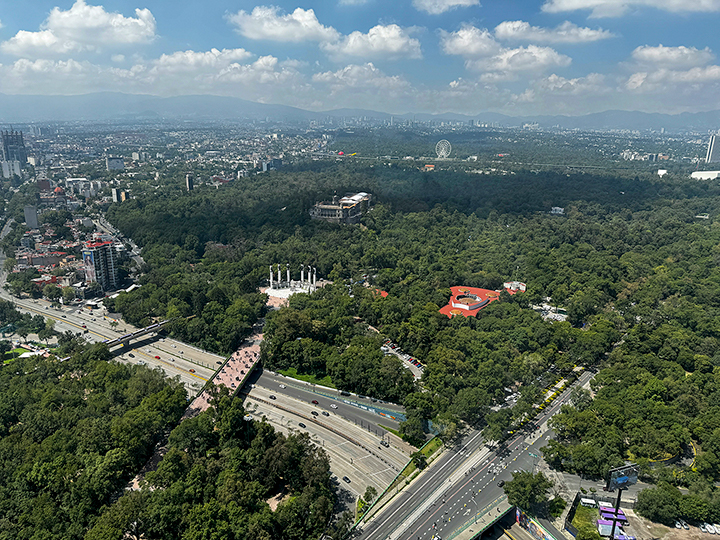
Although much of Tenochtitlán was eventually destroyed during the conquest, its monumental spirit never truly disappeared. The colonial city that emerged afterward inherited the ambition of building not simply a capital, but a statement.
Throughout the colonial era, aristocratic families, religious orders, and political institutions transformed Mexico City into an architectural showcase of wealth and influence. Massive stone mansions rose throughout the historic center. Ornate churches displayed elaborate baroque ornamentation. Government buildings projected imperial authority.
Architecture became spectacle.
But unlike the ostentatious excess associated with certain modern expressions of luxury, the palatial identity of Mexico City was rooted in permanence. These buildings were not designed to impress for a season; they were meant to endure for centuries.
And many of them have.
The historic center of Mexico City remains one of the most architecturally significant urban areas in the Americas. Walking through its streets today still reveals an extraordinary collection of palaces, mansions, and monumental civic spaces that define the city’s visual character.
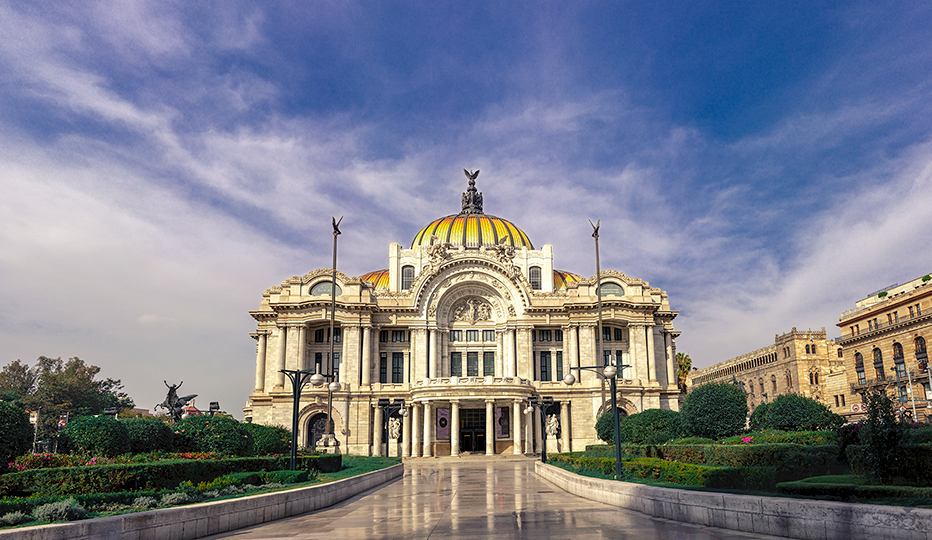
Among the most iconic examples stands the magnificent Palacio de Bellas Artes, perhaps the city’s most celebrated cultural landmark. With its dramatic white marble façade, art nouveau influences, and breathtaking interiors, Bellas Artes represents the moment when Mexico embraced modernity while still honoring its artistic heritage.
Nearby, the Palacio Nacional continues to embody political and historical significance. Built upon the former palace of Moctezuma, the building reflects the overlapping civilizations that define Mexico City itself. Within its walls, Diego Rivera’s murals narrate centuries of Mexican history with monumental intensity.
Then there is the extraordinary Palacio de Iturbide, one of the finest examples of baroque civil architecture in the city. Originally constructed in the eighteenth century as an aristocratic residence, the palace remains a powerful reminder of the refined urban culture that flourished during the colonial era.
A city of palaces
The city’s palatial identity extends far beyond government buildings and museums. Entire neighborhoods continue to reflect evolving architectural visions shaped by different historical periods.
During the late nineteenth and early twentieth centuries, under the influence of the Porfirian era, Mexico City experienced another transformation. French-inspired aesthetics, neoclassical façades, grand boulevards, and European urban ideals began to reshape the city’s visual language.
This influence remains visible along Paseo de la Reforma, one of the city’s most iconic avenues, where monumental buildings coexist with modern towers and contemporary architecture.
Yet perhaps the most fascinating aspect of Mexico City’s architectural identity is not its preservation of the past, but its ability to continuously reinterpret elegance across generations.
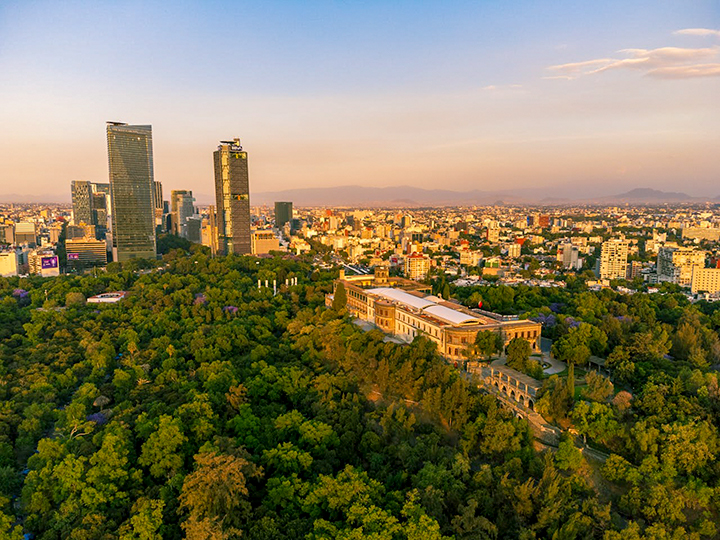
The city never became frozen in nostalgia.
Instead, architecture evolved alongside its cultural ambitions.
Modern Mexico City became a laboratory for some of the most important architects and designers in Latin America. Figures such as Luis Barragán transformed Mexican architecture into something emotional, intimate, and profoundly atmospheric. Barragán’s use of light, silence, texture, and color redefined contemporary luxury long before the term “minimalism” became fashionable worldwide.
His influence can still be felt throughout the city today.
In neighborhoods such as Polanco, Lomas, Roma, and Condesa, architecture continues to shape urban identity in subtle but powerful ways. Sophisticated residential buildings, contemporary art spaces, discreet luxury hotels, curated boutiques, and refined restaurants all contribute to an atmosphere where aesthetics remain deeply intertwined with daily life.
Polanco, in particular, represents a contemporary continuation of the city’s palatial tradition.
The grandeur here no longer depends on gilded ornamentation or monumental staircases. Modern luxury in Polanco expresses itself through proportion, restraint, craftsmanship, privacy, and atmosphere.
The neighborhood’s tree-lined avenues, elegant terraces, cultural institutions, and architectural refinement create an environment where sophistication feels natural rather than performative.
And perhaps that is the true legacy of the City of Palaces.
Mexico City taught itself centuries ago that luxury was never simply about wealth. It was about permanence, beauty, artistry, cultural ambition, and the emotional experience of inhabiting extraordinary spaces.
That philosophy continues to define the city today.
Whether inside a centuries-old palace in the historic center, a modernist masterpiece hidden behind jacaranda trees, or a contemporary rooftop overlooking the skyline of Polanco, one encounters the same underlying idea: architecture is not merely functional. It shapes emotion, identity, and memory.
Few cities understand that as deeply as Mexico City.
Its palaces may have originally belonged to emperors, aristocrats, and political elites, but their influence ultimately extended far beyond power itself. They established an aesthetic vocabulary that continues to define the city’s atmosphere centuries later.
And that is why Mexico City remains the City of Palaces.
Not simply because it possesses magnificent buildings, but because it learned long ago that true luxury is not something displayed.
It is something lived.
Leave a Reply