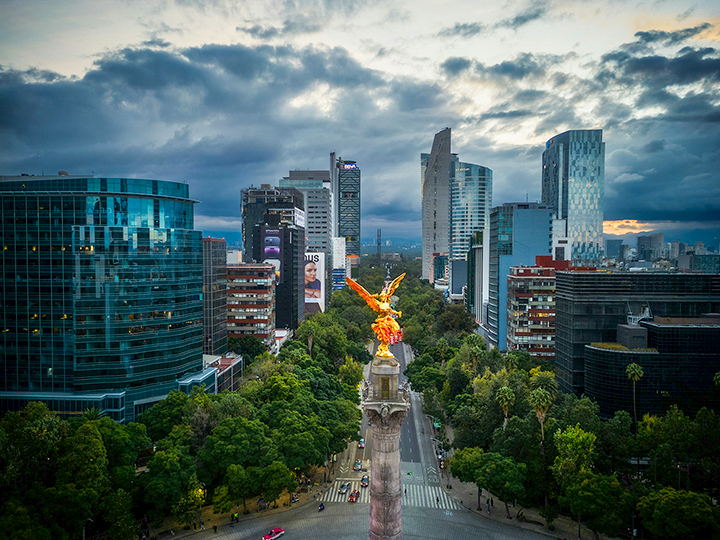
There is a deeply poetic reason why Mexico City has long been called The Most Transparent Region. The phrase was originally attributed to Mexican intellectual Alfonso Reyes and later immortalized by novelist Carlos Fuentes in his celebrated 1958 novel Where the Air Is Clear.
Yet the transparency they referred to had little to do with the physical clarity of the air — something modern Mexico City has certainly struggled with at times. Instead, it described something far more profound: the ability to see every layer of Mexico coexisting within the same urban landscape.
Because in Mexico City, nothing truly disappears.
Here, eras do not replace one another; they overlap.
Beneath a modern avenue may rest an ancient Mexica temple. Behind an elegant European façade may hide a colonial courtyard untouched by time. Across from a contemporary fine dining restaurant, a street vendor may still prepare tamales exactly as they were made fifty years ago. And perhaps that is the city’s true transparency: its constant ability to reveal what it was, what it is, and what it still dreams of becoming.
Learning how to see Mexico City requires time.
But more importantly, it requires openness.
This is not a city that immediately gives itself away. It does not seduce through polished perfection like other global capitals. Its beauty is more complex, more contradictory, and precisely because of that, infinitely more memorable.
Long before the palaces, the cafés of Polanco, or the elegant terraces where espresso is served at sunrise, there was Tenochtitlán — the extraordinary Mexica capital built upon a vast lake surrounded by volcanoes and mountains.
When Hernán Cortés arrived in the Valley of Mexico during the sixteenth century, he encountered a city that seemed almost impossible. Historical chronicles describe floating gardens, monumental temples, sophisticated canals, and bustling marketplaces unlike anything Europe had seen at the time.
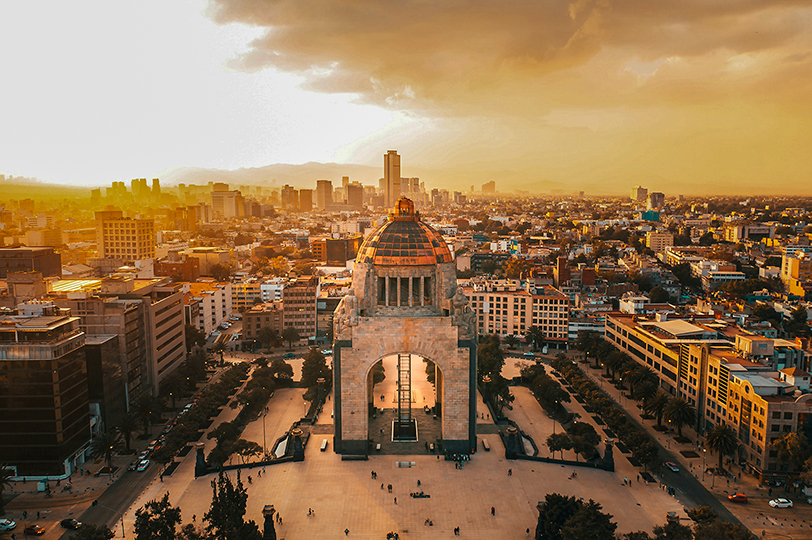
Modern Mexico City was quite literally built upon those ruins.
And perhaps that is why the city possesses such a singular energy: the constant sensation of walking through overlapping memories.
The colonial era transformed the city into what became known as the City of Palaces, a phrase famously attributed to explorer and scientist Alexander von Humboldt after visiting in the nineteenth century. Aristocrats and wealthy families built grand mansions, ornate churches, and magnificent civic buildings that still define much of the city’s architectural character today.
Even now, in the middle of modernity, Mexico City continues to converse with its past.
Colonial domes coexist with glass towers. Contemporary art museums share neighborhoods with traditional markets. Minimalist galleries exist only steps away from historic cantinas where time appears to slow down.
And within all those contrasts emerges Polanco.
Few neighborhoods capture the spirit of contemporary Mexico City quite like Polanco. Sophistication here never needs to announce itself loudly. It lives quietly in the details: in understated architecture, in restaurants where conversations linger for hours, in discreet luxury boutiques, and in cafés where executives, diplomats, artists, and international travelers naturally converge.
Polanco understands the art of slowing down.
In the mornings, terraces gradually begin to fill. The aroma of freshly ground coffee blends with the elegant rhythm of a city waking without urgency. Some people read. Others work. Others simply observe. Because in Mexico City, the luxury of lingering still exists.
And that has become increasingly rare in the modern world.
Only minutes away stand some of the continent’s most important cultural landmarks, including the Museo Soumaya, the Museo Jumex, and the legendary Bosque de Chapultepec — spaces where art, architecture, gastronomy, and urban life continuously intersect.
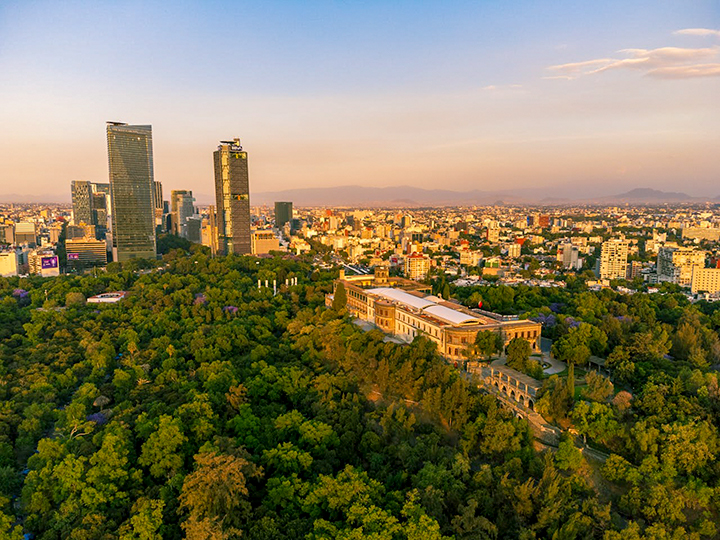
Chapultepec deserves special mention.
More than a park, it feels like a collective breath for the city itself. Its ancient trees, lakes, museums, and shaded pathways remind visitors that Mexico City is also profoundly connected to nature. It is easy to forget that this immense metropolis remains surrounded by mountains and volcanoes, and that it still preserves vast green spaces capable of completely transforming the urban experience.
Walking through Chapultepec in the early morning — especially beneath blooming jacarandas in spring — reveals another side of the city: quieter, more intimate, deeply emotional.
Because Mexico City also knows how to be serene.
That duality appears everywhere.
The city can feel monumental and intimate at the same time. Traditional yet radically contemporary. Chaotic yet sophisticated. Exhausting yet endlessly alive.
Perhaps that is why it remains so difficult to explain.
Its traditions continue to pulse strongly beneath the surface of modern cosmopolitan life. Religious celebrations still transform entire neighborhoods. Traditional markets coexist alongside internationally acclaimed culinary experiences. During Día de Muertos, the city becomes an emotional and visual spectacle unlike anything else in the world.
At the same time, Mexico City has established itself as one of the most important creative capitals on the planet.
Designers, chefs, photographers, architects, filmmakers, and artists continue to find endless inspiration here. There is something about this city that forces people to look differently. Perhaps because it never offers only one version of itself.
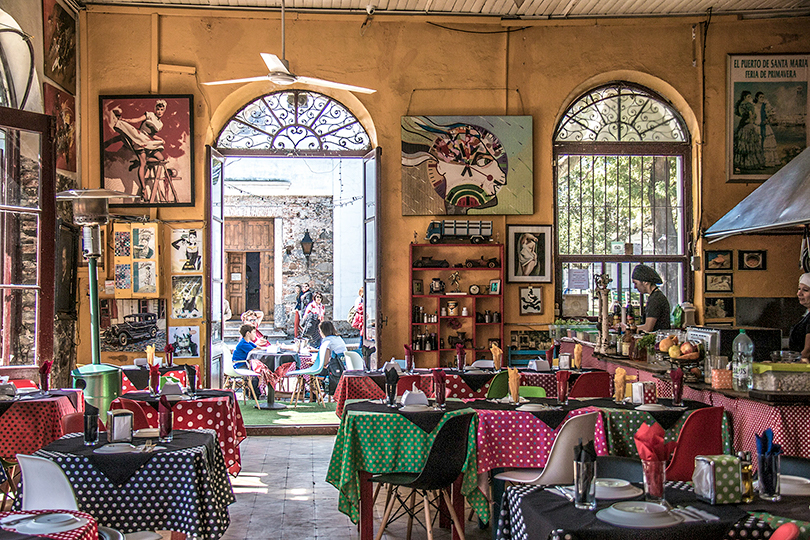
Every visitor discovers a different city.
Some find history.
Others find art.
Others find gastronomy.
Others find possibility.
And some — the fortunate ones — find belonging.
Because Mexico City is not simply a place to visit. Eventually, it begins to inhabit us as well.
Perhaps that is the true reason it remains The Most Transparent Region. Not because it reveals all its answers, but because it allows us to see ourselves reflected within it.
Every street, every terrace, every park, and every conversation seems to remind us that great cities are never simply destinations. They are emotional states.
And Mexico City understands that better than almost anywhere else in the world.
If you would like to know more about this exciting and wonderful city, drop a line in the comments. We will happily write about it.
Leave a Reply